
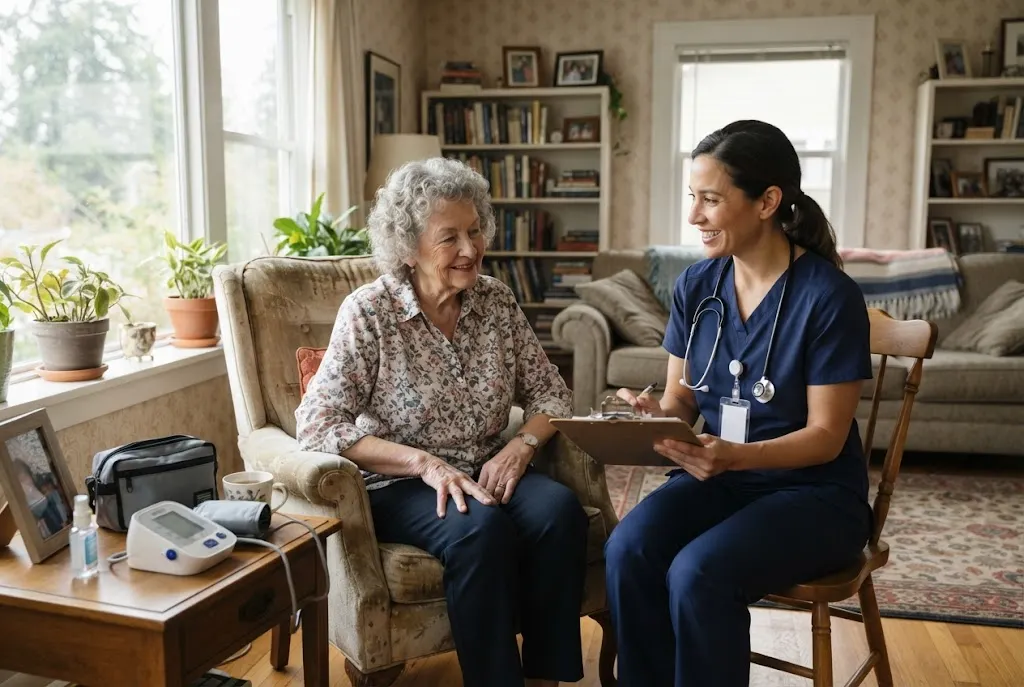
Home health care can involve different types of support depending on a person’s health needs and care plan. The right approach should always be based on the individual’s condition, goals, level of independence, and recommendations from qualified healthcare professionals.
What Home Health Services Can Provide
Home health care is designed to bring appropriate healthcare support into a person’s home rather than requiring every need to be handled in a hospital or facility. Depending on eligibility and the provider’s scope of services, home-based care can include skilled nursing, therapy, medical social services, and certain personal-care assistance.
For families researching providers such as Daniella Home Health Services, it is important to look beyond a general promise of comfort. A useful evaluation should consider what services are actually available, who provides them, how care plans are developed, and how the provider communicates with patients and families.
Readers researching broader healthcare topics may also find useful context in innovative healthcare and wellness services and information about a community health resource.
Why Personalized Care Matters
No two patients have exactly the same needs. Someone recovering after an illness may require a different level of assistance than an older adult managing an ongoing condition or a person working toward greater mobility after an injury.
A personalized care plan can help organize the type, frequency, and goals of appropriate support. It can also give family members a clearer understanding of what is being provided and when healthcare professionals should be contacted about changes in a patient’s condition.
Personalized support is especially important when rehabilitation or mobility is part of recovery. Related healthcare resources, including rehabilitation services, spine and physical-performance care, and chiropractic and sports-related care, demonstrate how different areas of healthcare can address specific patient needs.
Common Types of Home-Based Support
Skilled Nursing
Skilled nursing may be appropriate when a patient needs clinical care that requires a qualified nursing professional. Depending on the care plan, this can involve monitoring, education, wound-related care, medication-related support, or other medically necessary services.
Families should ask exactly which nursing services a provider offers and whether those services require an order or certification from a healthcare professional.
Physical, Occupational, and Speech Therapy
Therapy can play an important role in helping eligible patients work toward functional goals at home. Physical therapy may focus on movement and mobility, occupational therapy can address daily activities, and speech-language therapy can address communication or swallowing-related needs when clinically appropriate.
Healthcare education can also help families understand the professional roles involved in patient care. For example, radiologic technology education provides insight into another specialized area of the healthcare workforce.
Personal Care Assistance
Some home-care arrangements may include assistance with everyday personal activities. However, personal-care services and skilled home health services are not necessarily the same thing, and coverage rules can differ depending on the payer and the patient’s circumstances.
Families should therefore ask whether the provider offers personal-care assistance, skilled clinical services, or both.
Caregiver and Family Support
Family caregivers often need clear communication as much as the patient does. A strong care arrangement should make it easier to understand the care plan, recognize changes that require attention, and communicate concerns with the appropriate healthcare professional.
Family support can also extend beyond physical needs. Mental and emotional well-being can influence the overall caregiving experience, making resources related to mental health awareness useful as part of a broader wellness conversation.
How to Evaluate Daniella Home Health Services or Any Provider
Before choosing a home health provider, families should gather specific information instead of relying only on promotional descriptions. Consider asking the following questions:
- What types of home health or home-care services are available?
- Which professionals provide the care?
- How is the patient’s care plan developed?
- How frequently can visits or services be provided?
- How does the provider communicate with family caregivers?
- What happens if the patient’s condition changes?
- Which services require a physician or other qualified healthcare provider’s order?
- Does the provider work with the patient’s insurance or Medicare coverage?
- What costs may remain the patient’s responsibility?
- How are complaints, scheduling issues, and urgent concerns handled?
Insurance can be an important part of the decision. Readers comparing coverage-related information may also explore insurance information and health insurance considerations when planning healthcare expenses.
Understanding Medicare and Home Health Care
Medicare coverage for home health care has specific eligibility requirements. Covered services can include certain medically necessary skilled nursing care and therapy, while other types of ongoing personal or custodial assistance may not be covered in the same way.
Because coverage depends on eligibility, the patient’s medical needs, the care plan, and the type of service involved, families should confirm benefits directly with Medicare, their Medicare Advantage plan, or their insurance provider before assuming that a particular service will be covered.
Healthcare-related financial questions can also arise when families are coordinating multiple forms of care. Resources covering Medicaid-related customer service and healthcare coverage can provide additional background when families are researching available options.
The Importance of a Safe Home Environment
Receiving care at home can make the familiar environment part of the patient’s daily routine, but the home should also be appropriate for the person’s mobility and care requirements.
Families may need to consider fall risks, bathroom accessibility, pathways, lighting, sleeping arrangements, and the placement of medical equipment. General information about creating a healthier living environment can be found in this guide to healthy home services and living spaces.
When household needs overlap with healthcare needs, it is useful to distinguish ordinary home services from medically necessary home health care. A general home services resource can help illustrate that distinction.
Communication Can Improve the Care Experience
Good communication is one of the most practical elements of home-based care. Patients and families should know who to contact with questions, how appointments are scheduled, and what information should be shared with the patient’s healthcare team.
Clear communication is particularly important when several healthcare professionals are involved. The patient’s doctor, nurses, therapists, caregivers, and family members may all contribute to different parts of the overall care process.
For people exploring healthcare as a professional field, resources such as healthcare coordination roles can also provide perspective on the broader systems that support patient care.
What Families Should Look for in a Home Health Provider
A provider should be evaluated according to the patient’s actual needs rather than a generic definition of premium care. Important factors can include appropriate credentials, clear service descriptions, communication practices, care-plan coordination, scheduling reliability, and transparent information about costs.
Families may also want to understand whether the provider can accommodate changes in care needs or coordinate with other healthcare professionals. A provider’s ability to communicate clearly can be just as important as the individual services offered.
Questions to Ask Before Starting Care
A short conversation before beginning services can reveal important details. Ask who will visit the home, what qualifications the caregivers or clinicians have, what happens if a scheduled visit must be changed, and how urgent concerns are handled.
It is also useful to ask for written information about services, pricing, insurance participation, cancellation policies, and the responsibilities of the patient and family. Keeping this information organized can make the transition into home-based care easier.
Final Thoughts on Daniella Home Health Services
Daniella Home Health Services can be considered within the broader landscape of home-based care, where comfort, personalized support, professional coordination, and patient dignity are important considerations. The right provider depends on the individual’s health needs and the services that are actually available.
Rather than choosing a provider solely because of a description such as “premium care,” families should verify the provider’s services, qualifications, coverage arrangements, care-planning process, and communication procedures. Taking those steps can help patients and caregivers make a more informed decision about receiving appropriate support at home.
Frequently Asked Questions
What is home health care?
Home health care refers to healthcare services provided in a patient’s home. Depending on eligibility and medical needs, services may include skilled nursing, physical therapy, occupational therapy, speech-language services, and other qualifying support.
Is home health care the same as personal care?
No. Home health care can involve skilled clinical services, while personal care generally refers to assistance with everyday activities. Some providers may offer both, but the services and payment rules can differ.
Does Medicare cover home health services?
Medicare can cover certain home health services for eligible beneficiaries when specific requirements are met. Coverage depends on the patient’s circumstances and the type of service being provided.
How should a family choose a home health provider?
Families should compare services, professional qualifications, care planning, communication procedures, availability, insurance participation, and expected costs before starting care.
Can home health care support recovery after an illness or injury?
Yes, eligible patients may receive certain home health services intended to help them recover, maintain their current condition, or manage functional limitations. The appropriate services depend on an individual’s care plan and healthcare needs.