
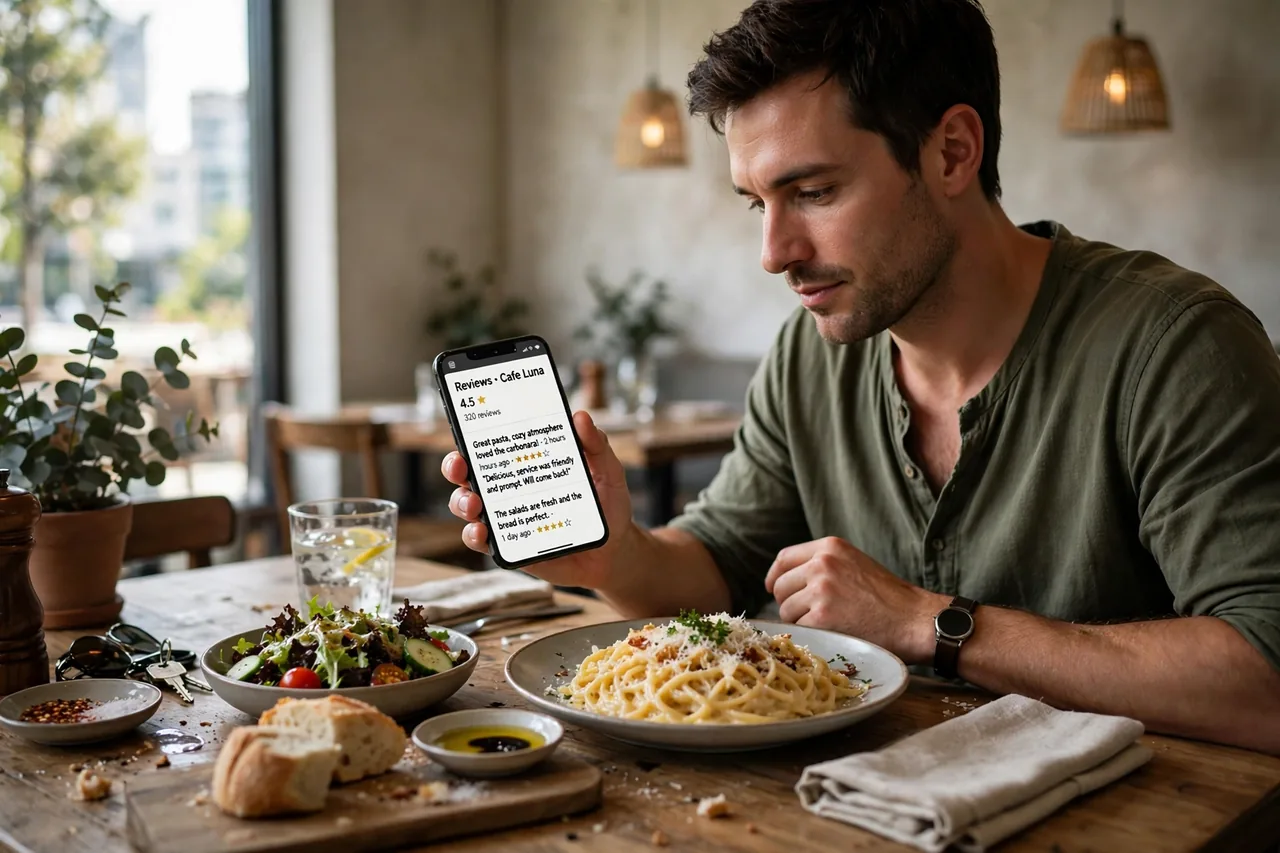
Every diner has done it: picked a restaurant with glowing reviews, sat through a mediocre meal, and wondered whether the reviewers ate at the same place. The problem is rarely that reviews are useless — it is that most people read them wrong, scanning the star rating and the two most extreme opinions. Learning how to read restaurant reviews properly takes about five minutes, and it changes what you find: patterns instead of noise, specifics instead of superlatives, and a much better hit rate when you book. Here is the method experienced diners use.
Why the Star Rating Alone Misleads
Averages hide everything interesting. A restaurant rated 4.2 might be consistently good, or wildly inconsistent with ecstatic fans and furious detractors in equal numbers — two very different evenings. Ratings also drift with fashion: a place can be punished for small portions by one crowd and praised for them by another. Treat the headline score as a rough filter only. The real information lives in the text, which is why knowing how to read restaurant reviews means reading the reviews themselves, not the summary.
Look for Patterns, Not One-Offs
One complaint about slow service is an anecdote; six complaints across three months is a pattern. Scan a dozen or more recent reviews and note what repeats — the dish everyone names, the recurring praise for a particular server, the same gripe about noise or booking chaos. Repetition across strangers who owe each other nothing is the closest thing reviews offer to verified fact. Weight recent reviews more heavily than old ones: kitchens change chefs, owners and menus, and a rave from three years ago may describe a restaurant that no longer exists.
The Three-Star Reviews Tell the Truth
Five-star reviews gush; one-star reviews vent. The three-star middle is where the balanced, specific, believable accounts live — “the pasta was excellent, the room is loud, book the early sitting.” When you are deciding, read the middle band first. It gives you the trade-offs honestly, and choosing a restaurant is mostly about deciding which trade-offs suit your evening.
Specifics Beat Superlatives
“Amazing food, great vibes” tells you nothing. “The duck was crisp, the tasting menu took three hours, and they handled our nut allergy without fuss” tells you almost everything. Trust reviews that name dishes, times, prices and situations; discount reviews written entirely in adjectives. The same applies in reverse — a one-star review complaining about something you do not care about (no parking, no kids’ menu) is, for you, a positive signal about the room.
Check the Reviewer, Not Just the Review
A reviewer with a long history of varied, detailed reviews is worth ten single-review accounts. Be gently suspicious of clusters: several five-star reviews posted in the same week, in similar language, from brand-new accounts, is a pattern restaurants can buy. Equally, a sudden run of one-star reviews sometimes marks a dispute rather than a decline. You do not need detective work — thirty seconds of pattern-spotting is enough, and it pairs well with the broader approach in our guide to how to choose a restaurant in a new city.
Photos and Owner Responses
Diner photos are the least filtered evidence available: portion sizes, room lighting, how the food actually arrives. Scroll them before the professional shots. Then read how the owner replies. A business that answers criticism calmly and specifically — “we have changed our booking system since March” — is telling you it listens. Defensive or copy-paste replies tell you the opposite. Neither guarantees your meal, but both predict how problems get handled if one lands on your table.
Street Food and Markets Play by Slightly Different Rules
For stalls and street vendors, review volume is thinner and turnover is part of the charm. Queues of locals, high ingredient turnover and visible cleanliness matter more than any score. Our street food safety tips cover how to judge a stall on the spot; combine that with a quick review scan for hygiene mentions and you have the full picture.
Delivery Reviews Are a Different Animal
If you mostly order in, read those reviews differently again. Delivery ratings mix the food with the logistics: a cold dish may be the courier’s fault, not the kitchen’s, and a restaurant that shines in its dining room can be careless with takeaway packaging. Look specifically for comments about how dishes travel — what arrives crisp, what arrives soggy — and for portion comments, which tend to be more honest in delivery reviews than anywhere else. A kitchen’s own delivery menu is also usually narrower; reviews of dishes they no longer deliver are noise. Judge the recent, food-specific comments and ignore the rest.
Write Reviews That Help the Next Diner
Finally, the system only works if readers also write well. When you review, be the reviewer you wished you had found: name the dishes, mention the day and sitting, separate the food from the service from the room, and say what kind of evening you were after. “Booked for a quiet anniversary; the set menu was superb but the bar area is loud” helps three different readers at once. Praise specifically, criticise fairly, and update rather than duplicate if you return. Restaurants read these, good ones act on them, and the diner who benefits next time may be you.
Putting It Together Before You Book
The whole method takes minutes: filter by recent reviews, read the three-star band, hunt for repeated specifics, glance at diner photos and the owner’s replies. What you get is not a guarantee — no review system offers one — but a realistic preview of the evening you are actually likely to have. That is all a good decision needs. Restaurants, like reviewers, reward people who pay attention.