
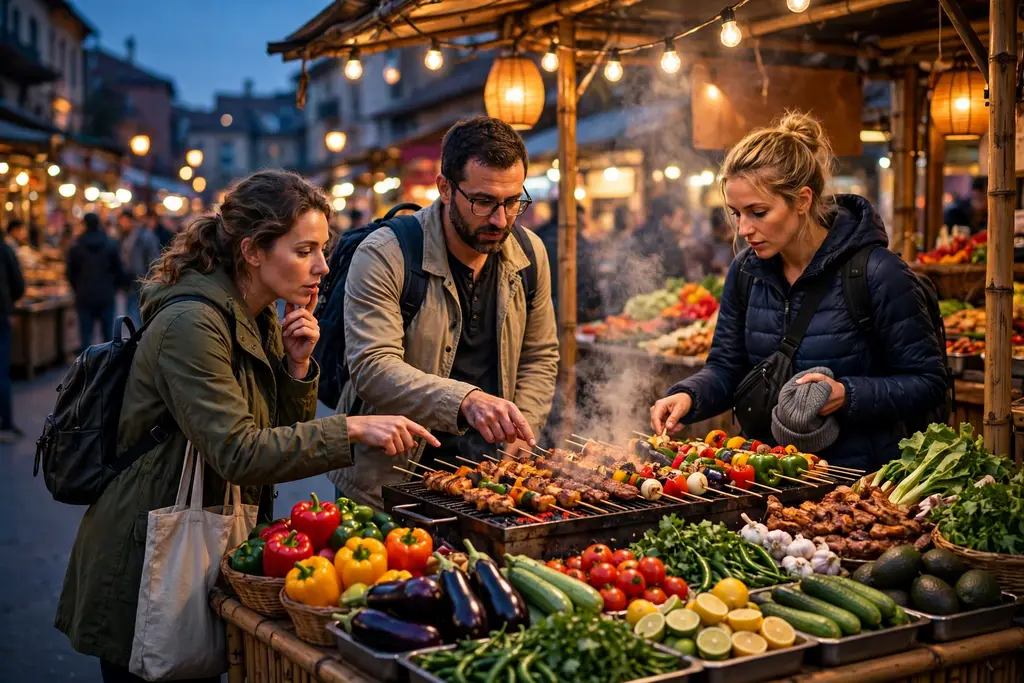
The best travel meals rarely come with tablecloths. They come from a sizzling stall in a night market, eaten standing up while the cook works at astonishing speed. A few sensible street food safety tips are all that stand between you and those meals, because the goal is not to avoid street food; it is to choose it well. Travellers get sick from careless choices, not from street food itself, and the locals eating beside you are proof that the right stall is perfectly safe. These street food safety tips will help you eat adventurously and stay well.
Follow the Crowd, Especially the Local One
The single most reliable signal is turnover. A busy stall cooks food fresh, uses ingredients quickly and has a reputation to protect, while an empty stall on a busy street is a warning the locals have already given you. Watch where local families, office workers and students queue, and join that queue even if it means a short wait. High turnover also means the oil is fresh, the sauces were made today and nothing has been sitting warm for hours. This one habit prevents more bad experiences than every other rule combined.
Watch It Cook, Eat It Hot
Choose food that is cooked in front of you and served steaming. Heat is your friend: freshly grilled, fried, boiled or stir-fried food has just passed through temperatures that kill the bacteria travellers worry about. Be cautious with pre-cooked items kept warm under a lamp, raw salads washed in unknown water, and cut fruit that has been sitting in the sun. If a dish is meant to be served cold, pick a stall that keeps it properly chilled on ice. In the markets near the places to visit in Marrakech for free, for example, the stalls that grill to order in the evening square are both the tastiest and the safest choice.
Water, Ice and Raw Ingredients
Drink sealed bottled water or water you know has been boiled, and be thoughtful about ice: in many cities factory-made ice with a uniform shape is produced from treated water and is widely used by vendors, while crushed ice from an unknown source is the riskier option. When in doubt, skip the ice rather than the drink. Peel fruits yourself, choose cooked vegetables over raw garnishes in places where your stomach is still adjusting, and give yourself a day or two of gentler eating when you arrive somewhere new. Our guide to eco-friendly travel has more on eating locally and lightly while you explore.
Clean Hands, Clean Habits
Carry hand sanitiser or wet wipes and use them before you eat, every time; it is the simplest of all street food safety tips and the one travellers forget most. Look at the stall itself: a cook who handles money and food with the same unwashed hand, or who wipes a plate with a grey cloth, is telling you something. Separate money-handlers and food-handlers, covered ingredients and a clean water source for washing are all good signs. Eat where the washing-up water is changed often and the workspace looks organised rather than chaotic.
Utensils deserve a glance too. In many markets, chopsticks, spoons and forks are kept in a container on the table; a quick wipe with a clean tissue before you start is a reasonable habit, and some travellers carry their own reusable set, which also cuts single-use waste. If dishes are rinsed in a shared basin, choose the stall where that water is visibly refreshed rather than clouded from a hundred plates. None of this requires suspicion or fuss; it is the same quiet observation locals make automatically, and after a few days of travelling it becomes second nature for you as well.
Start Gently and Build Up
Your stomach needs a little time to adjust to new spices, oils and microbes, so begin with milder dishes and smaller portions, then work up to the fiery and the unfamiliar over a few days. Eat your biggest street food meals earlier in the trip rather than the night before a flight. Stay hydrated, because heat, walking and rich food together dehydrate travellers faster than they realise; the packing mindset in our carry-on only packing guide leaves room for a reusable bottle, which helps with exactly this. If you do feel unwell, rest, sip fluids steadily and eat plainly for a day; most minor upsets pass quickly.
Learn a Little of the Language of Food
A few phrases go a long way: the words for grilled, boiled, spicy and no ice, plus please and thank you. Pointing, smiling and watching what the person ahead of you orders is a perfectly good system too. Ask your hotel or a local guide which stalls they eat at themselves; personal recommendations beat any list. Travellers hunting the free highlights in our guide to places to visit in Tokyo for free will find the same pattern there: the convenience-store and market food locals rely on daily is fresh, safe and delicious.
Markets, Buffets and Food Tours
Different settings carry different risks, so adjust your approach. At market stalls and night markets, the cook-to-order rule protects you almost everywhere. At buffets, arrive when service starts rather than near the end, choose dishes that are replenished often, and avoid anything that looks like it has been sitting lukewarm through a long afternoon; a busy buffet with a queue for the fresh tray is a far better bet than a quiet one with full, untouched dishes. Guided food tours are an excellent way in for cautious eaters, because a good local guide takes you to stalls they personally trust and orders dishes you would never have found alone. If your accommodation offers a local breakfast, that is often the gentlest introduction to regional flavours, cooked in a proper kitchen but rooted in the same traditions. Build from these safer starting points towards the adventurous stalls as your confidence and your stomach settle in.
Eat Boldly, but Eat Smart
Street food is culture you can taste, and avoiding it entirely means missing half the point of travelling. Use these street food safety tips as a filter, not a fence: busy stall, cooked fresh, eaten hot, clean hands, sensible water. Then order the thing you cannot pronounce, watch it come together over the flames, and enjoy one of the great pleasures of the road. If you cook at home too, our meal prep guide for beginners can help you recreate a few of those flavours when you get back.