
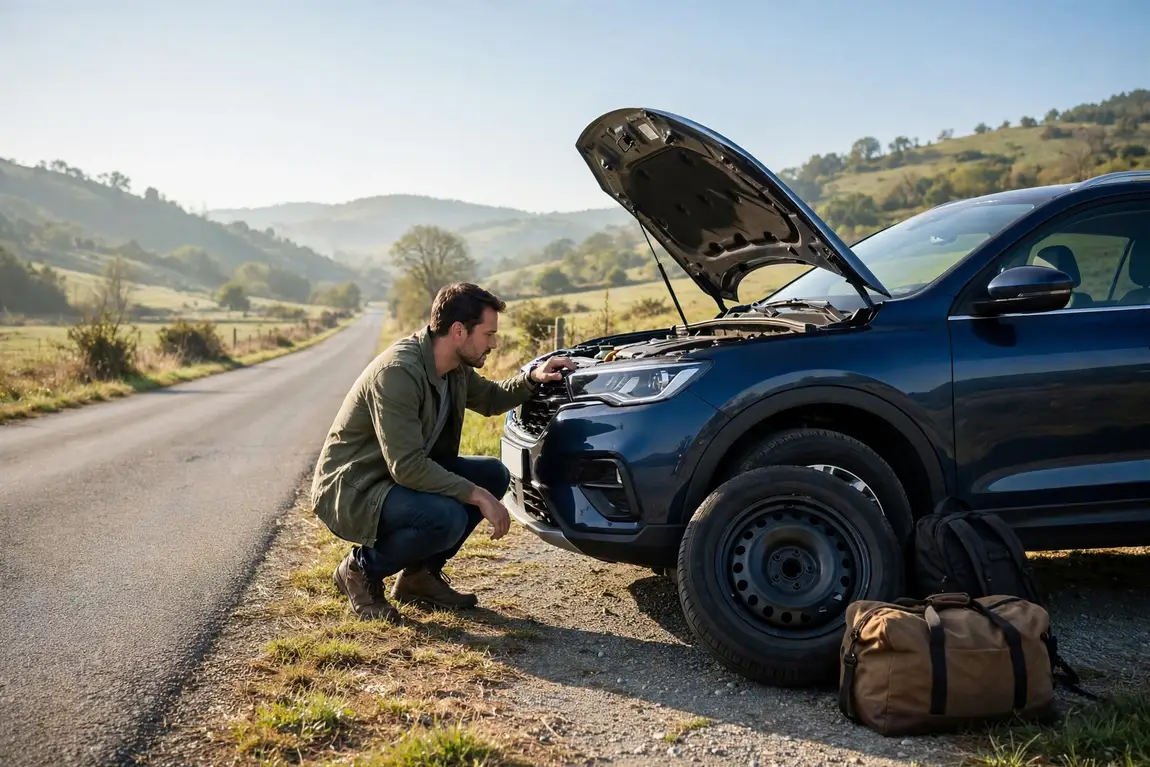
The smartest way to enjoy a long drive is to prepare your car for a road trip before the trip can test it. Most roadside breakdowns are not bad luck; they are worn tyres, tired batteries, low fluids and small faults that were quietly waiting for a hot motorway and a fully loaded boot. Give your car one careful hour of attention in the week before you leave and you dramatically cut the odds of spending your holiday on the hard shoulder. Here is how to prepare your car for a road trip, in the order a mechanic would check it.
Tyres: Your Only Contact With the Road
Check the tread depth on all four tyres (the legal minimum is not the same as a safe margin for a long, loaded trip), and look for cuts, bulges and uneven wear, which can signal alignment problems. Set pressures to the manufacturer’s figure for a loaded car, which is usually printed on the driver’s door frame or fuel flap, and do it while the tyres are cold. Do not forget the spare: if your car has one, check its pressure too, and if it has a repair kit instead, make sure the sealant has not expired. A tyre you have never looked at is not a plan.
Fluids: The Five-Minute Health Check
With the engine cold and the car on level ground, check the engine oil on the dipstick and top up with the correct grade if it sits near the minimum mark. Check the coolant level in its translucent tank, never by opening a hot radiator cap. Top up the windscreen washer bottle, because a long drive collects insects at a heroic rate. Look at the brake fluid reservoir; if the level is low, that can mean worn brake pads, so have it looked at rather than simply topping up. These checks cost nothing and catch the problems that strand people most often.
Brakes, Battery and Lights
Your brakes should feel firm and pull the car up straight, without squealing, grinding or vibration. Any of those symptoms before a trip means a garage visit now, not after. Batteries most often fail at the start of a journey after sitting loaded with the doors open while you pack, so if yours is more than four years old or the engine has been turning over slowly, get it tested; many auto shops will do this free. Finally, walk around the car at dusk and check every light, including brake lights and indicators, and replace bulbs in pairs where one has gone.
Wipers, Air Conditioning and the Cabin
Wiper blades that smear in town will be dangerous in motorway spray, and they are cheap and quick to change. Test the air conditioning before you need it on a hot afternoon with tired passengers; if it blows warm, a re-gas may fix it. Clean the inside of the windscreen, because the film that builds up there glares badly at night. If you are travelling in autumn or winter, add a scraper, a warm blanket and a torch to the boot. Comfort is not a luxury on a long drive; a tired, overheated driver is a safety problem, which is one reason our guide to travelling more sustainably also recommends slower, better-planned journeys.
Pack the Car Like It Matters (Because It Does)
Put the heaviest items low and as far forward in the boot as possible, keep the rear window clear, and secure anything loose, because in a sudden stop a water bottle becomes a projectile. Keep documents, chargers, snacks, water and any medication in the cabin, not buried under luggage. The discipline in our guide on how to pack light for any trip applies to cars too: the less you haul, the less fuel you burn and the kinder the trip is to your suspension. If you use a roof box, check its fittings twice and remember it is up there when you meet a height barrier. Car enthusiasts planning a pilgrimage might enjoy our list of places to visit in Japan for car enthusiasts, where the driving itself is half the attraction.
The Emergency Kit Worth Its Space
A small kit turns most minor disasters into minor delays: jump leads or a portable jump starter, a tyre inflator, a basic toolkit, a high-visibility vest, a warning triangle, a first-aid kit, a phone power bank and a litre of water for the car and another for you. Add your breakdown cover details and the number saved in your phone, not just in the glovebox paperwork. If your trip is a special one, the experiences in our round-up of luxury travel experiences worth splurging on deserve a car that will not interrupt them.
Keep the kit somewhere you can reach it without emptying the boot at the roadside, ideally in a side pocket or on top of the luggage. Check it once a year: batteries in the torch, the expiry date on the first-aid supplies and the charge in the power bank all quietly run down while the kit sits forgotten. A kit you have checked is equipment; a kit you have not is just extra weight.
Know Your Route and Your Car’s Limits
Preparation is not only mechanical. Check your route for long stretches without fuel stations, especially if you drive at night or through rural areas, and plan fuel stops the way you plan rest stops: every couple of hours, before the tank drops below a quarter. Know roughly how far your car travels on a full tank so a closed station never becomes a crisis. If you are towing or carrying a full load, remember that braking distances grow and hills feel steeper; give the car more time and space than usual. Check the weather along the whole route, not just at home, because a mountain pass or coastal road can be in a different season from your driveway. Share your route and expected arrival time with someone at your destination, and keep your phone charged so a delay never becomes a worry. Drivers planning scenic detours will find plenty of inspiration in our guide to the best places to visit in Germany in fall, where the journey matters as much as the destination.
The Day-Before Drive
Finish your checks with a short drive the day before departure: listen for new noises, feel for pulling under braking, and confirm the car sits level and the steering feels straight. Fill the fuel tank, set your route and download offline maps for areas with weak signal. Then sleep properly. The final step in how to prepare your car for a road trip is preparing the driver, because the best-maintained car in the world still needs someone alert behind the wheel. Do the checks, pack with intent, and the drive itself becomes the relaxing start of the holiday instead of its first risk.