
Arriving hungry in an unfamiliar place and picking the wrong restaurant can flatten an otherwise great day. Learning how to choose a restaurant in a new city is a genuine travel skill, built from a few reliable checks: where the place is, what the reviews really say, what the menu tells you, and who else is eating there. Master those, and you will eat well almost anywhere, from a small town you are passing through to a capital city on another continent.
Start with the neighbourhood, not the rankings
The best meals in a new city are rarely found on the main tourist square, where rents are high, menus are laminated in five languages and kitchens cook for people they will never see again. Walk ten minutes in any direction and the picture changes: prices drop, portions grow and the cooking is aimed at people who might come back. Base yourself where residents actually eat, near markets, side streets off the main drag and the roads around stations in older cities. Our local dining guide to restaurants in Elkader, Iowa shows how even a small town rewards the diner who looks beyond the highway exit.
Read reviews like a detective
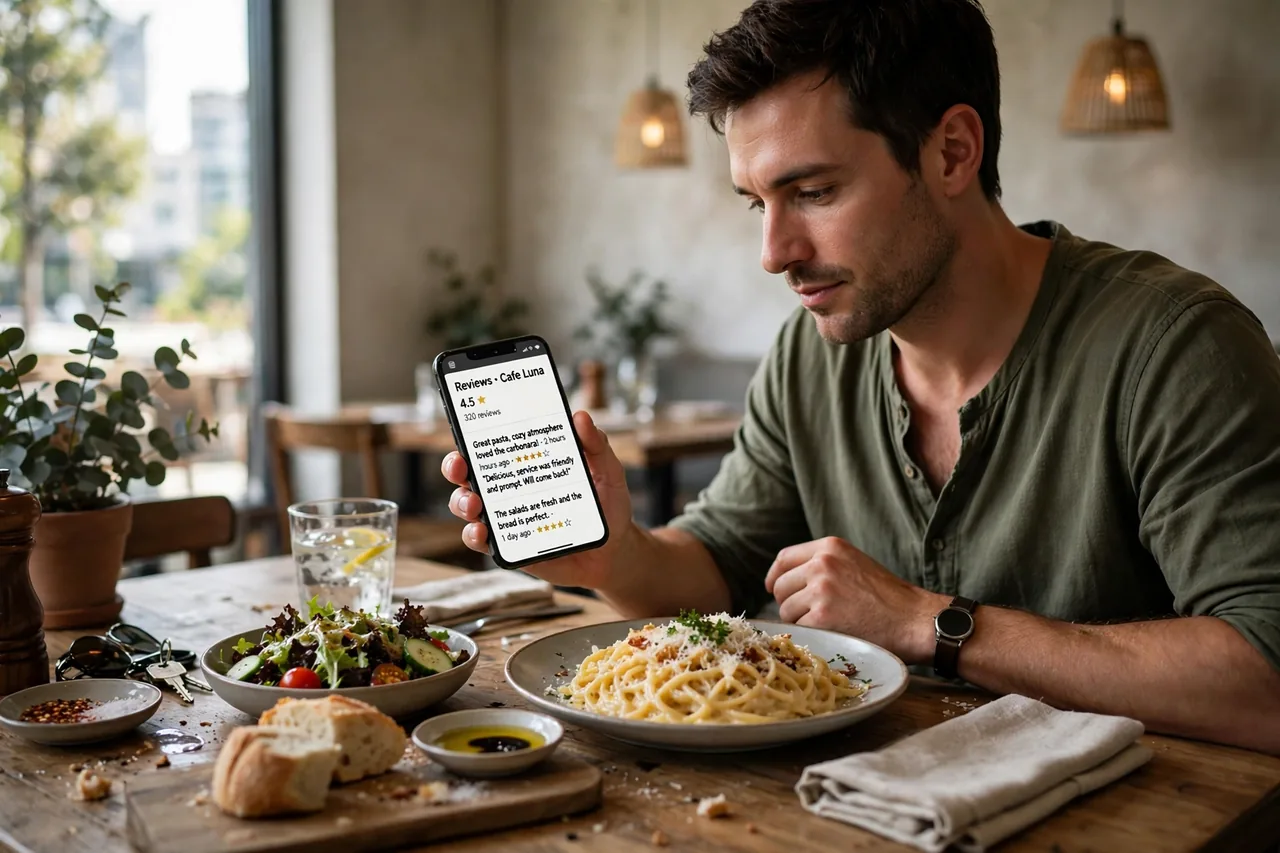
Reviews are essential when you choose a restaurant somewhere new, but they need reading properly. Look at the pattern rather than the average: a place with hundreds of reviews and a steady rating is a safer bet than one with a perfect score from a dozen people. Read the recent reviews, especially the middling three-star ones, which tend to be the most honest about noise, waits and portion sizes. Pay attention to what locals praise, not just fellow tourists, and treat a wall of generic five-star reviews posted in the same month with suspicion. Photos from diners are worth more than the restaurant’s own gallery, because they show real plates in real light.
Let the menu do the talking
A menu tells you more about a kitchen than any advertisement. Short menus usually mean the kitchen cooks a limited range of dishes properly and buys ingredients for them daily. Very long menus covering several cuisines often mean a freezer doing the heavy lifting. Look for regional dishes and seasonal items; a restaurant proud of where it is will cook what grows and swims nearby. Prices should be visible before you sit down, and a menu in the window is a good sign. The much-loved local spots in our feature on Kip Restaurant in Pals built their reputations exactly this way, on focused menus rooted in their region.
Use the oldest clues in the book
Some signals never change. A dining room full of local families at local mealtimes is the strongest recommendation any restaurant can have. A queue at lunchtime, staff who can explain the dishes, bread that arrives warm, and a room that smells of cooking rather than cleaning products all point the same way. Equally, trust your doubts: empty tables in a busy area at peak hour, staff trying to pull you in from the pavement, and photos of food on the door that look nothing like the plates going past are all reasons to keep walking.
Ask the people who live there
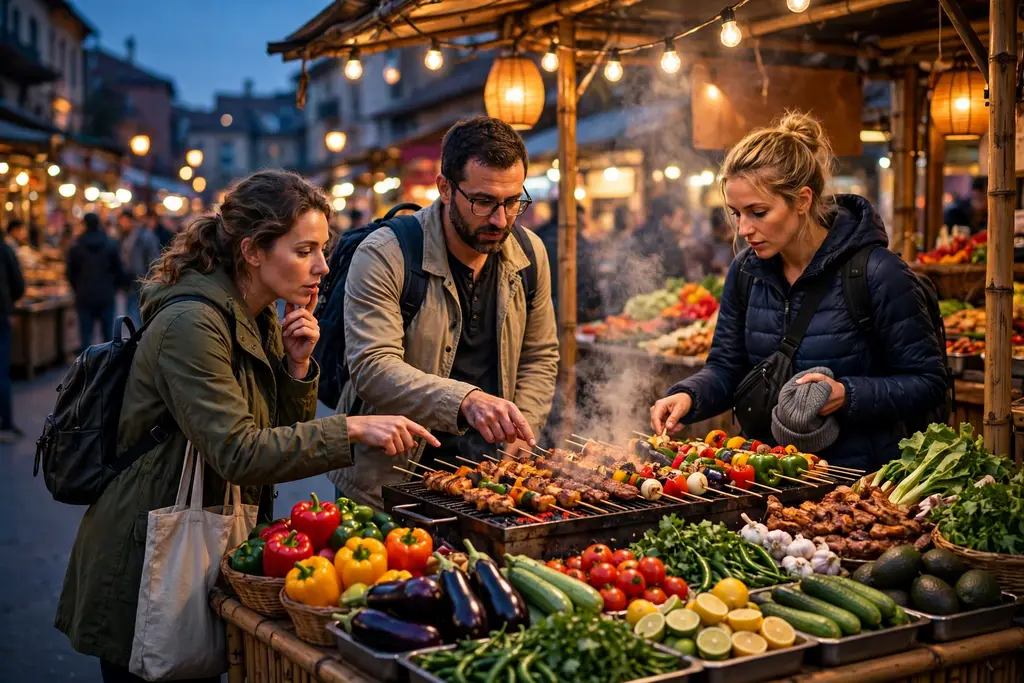
The fastest research you can do in a new city is a thirty-second conversation. Hotel receptionists eat out on their own money when their shift ends, taxi drivers know where the night staff go, and the person running your market stall in the morning knows exactly which kitchen buys the same produce you are looking at. Ask a specific question: not “where is good?” but “where would you take your family on a Sunday?” Specific questions get honest answers, and the names that come up again and again are the places to book. Phrasebooks and translation apps make this easy even where you do not share a language; a smile and the name of the local speciality will carry the conversation a long way.
Concierge recommendations deserve one note of caution. Some are genuine, and some are arrangements. Treat them as a starting point and run them through the same checks as everything else: recent reviews, a short menu and a room you can look into before you commit.
Match the restaurant to the occasion
Knowing how to choose a restaurant also means matching the place to the moment. A long tasting menu is wonderful for an anniversary and a poor idea before an early train. Travelling with children calls for earlier sittings, space for restless legs and a kitchen that turns food around quickly. On a budget, lunch is your friend: many good restaurants serve a set midday menu built from the same kitchen as the evening service at a fraction of the price. And if you are only in town for one night, choose the place that cooks the dish the city is known for, not the cuisine you eat every week at home.
Book smart, or walk in early
In popular cities the best small restaurants fill up fast, and turning up at eight on a Friday is a recipe for the place you settled for instead. Book a day or two ahead for dinner at anywhere well reviewed, or do what locals do and eat a little earlier or later than the crowd. Lunch is the walk-in diner’s friend: the same kitchens are calmer, the staff have time to talk you through the menu, and the set menu often includes the dishes the place is proudest of. If a restaurant takes no bookings at all, put your name down and take a short walk rather than standing hungry in the doorway; a good host will find you when the table is ready.
Put it into practice on your next trip
These habits travel well. Planning a route through the stops on our list of top places to visit in Europe in summer, you can apply the same checks in every city: stay off the main square, read the recent reviews, favour the short menu. Food is often the strongest memory of a place, as anyone exploring the towns in our guide to amazing places to visit in Italy discovers quickly, because a great meal anchors a day of sightseeing. Even on driving holidays along the routes in our round-up of scenic road trips around the world, stopping in a town at lunchtime instead of a service station applies the same principle: eat where the town eats.
Choose a restaurant in a new city the way locals would choose it for a friend: nearby streets over famous squares, recent reviews over perfect scores, short menus over long ones, and a room full of neighbours over a room full of cameras. Do that, and dinner stops being a gamble and becomes one of the best parts of the trip.