
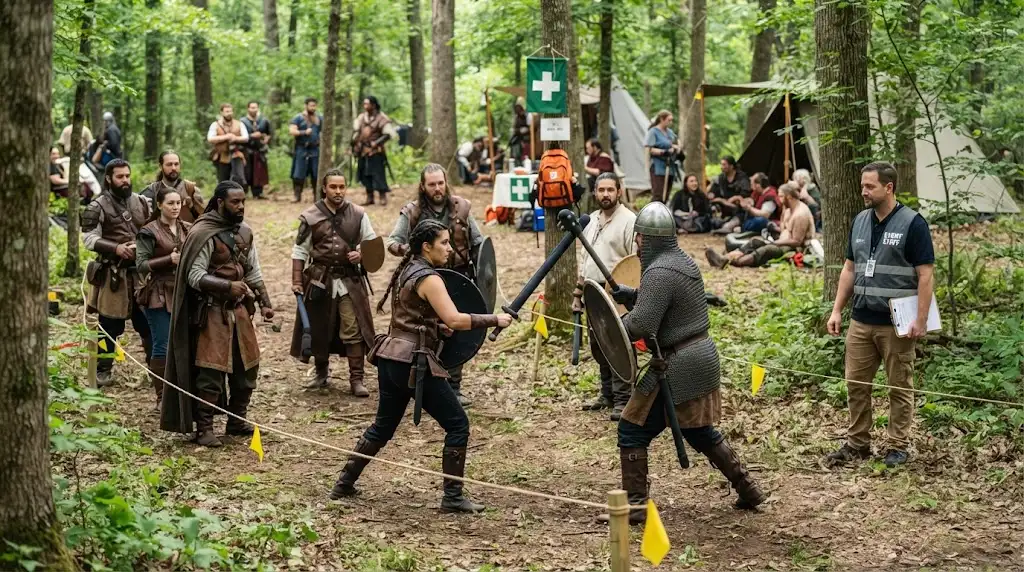
LARP events can involve participants, volunteers, spectators, venues, equipment, props, outdoor locations, and physical gameplay. Depending on the policy, specialized insurance may help address certain liability claims involving bodily injury or property damage. However, coverage varies by insurer, activity, location, limits, exclusions, and policy terms.
What Is LARP Insurance?
LARP insurance is specialized insurance designed for organizations, groups, game masters, event operators, or other parties involved in live action role-playing activities. It can help address specific financial risks associated with organizing and operating LARP events.
For example, a LARP event may take place on rented land, in a recreation area, at a campground, or inside a dedicated event venue. The property owner may require proof of liability insurance before allowing the event to take place. Some specialty programs can also allow venues or landowners to be listed as additional insureds, subject to the policy requirements.
If you are researching insurance-related topics more broadly, our guide on Brewer Insurance School reviews provides another useful perspective on insurance education and professional preparation.
Why Do LARP Organizers Need Insurance?
LARP activities can create risks that ordinary personal insurance may not be designed to handle. Participants may run, interact with props, use padded weapons, navigate uneven outdoor areas, or take part in staged combat scenarios. Spectators and volunteers can also be present around the activity.
Specialized liability coverage may help protect organizers against covered third-party claims arising from incidents such as bodily injury or property damage. Some programs also provide defense-related protection when a covered claim results in legal proceedings.
The exact protection should never be assumed. Organizers should review the policy wording and discuss their actual activities with a licensed insurance professional before purchasing coverage.
What Can LARP Insurance Potentially Cover?
Coverage differs between insurance programs, but specialty LARP policies may include several areas of protection.
General Liability
General liability is one of the most important areas for LARP organizers to investigate. Specialty LARP programs may provide coverage for covered claims involving third-party bodily injury, property damage, and related legal defense expenses.
Participant and Spectator Risks
Because LARP events can involve many people in an active environment, organizers should consider what could happen if a participant, volunteer, or spectator is injured. Some specialty programs specifically address participant and spectator liability, subject to their terms and exclusions.
Equipment and Property
LARP groups can invest significantly in costumes, props, armor, game equipment, tents, lighting, and other materials. Liability insurance does not automatically mean that an organization’s own equipment is covered. Some specialty programs offer separate equipment or inland marine coverage as an optional solution.
This distinction is important because damaging someone else’s property and damaging your own equipment can involve completely different insurance considerations.
Hired and Non-Owned Vehicles
Some LARP organizations rent or borrow vehicles for transporting equipment or supporting events. Certain specialty programs offer hired and non-owned automobile liability as an optional coverage, but eligibility and limits vary.
LARP Insurance and Venue Requirements
Finding a suitable venue is often one of the first major challenges for an event organizer. A property owner may require a certificate of insurance and may also request additional-insured status.
Before booking a location, ask the venue for its insurance requirements in writing. Check the requested liability limit, policy dates, additional-insured wording, certificate requirements, and any restrictions on activities.
Keeping these requirements in mind early can prevent an organizer from purchasing a policy that does not satisfy the venue’s conditions.
How Much Does LARP Insurance Cost?
There is no universal price for LARP insurance. Premiums can depend on factors such as participant numbers, event frequency, location, activity type, physical interaction, selected limits, optional coverages, and underwriting requirements.
For that reason, organizers should provide accurate information when requesting a quote. Giving an incomplete description of combat activities, attendance, alcohol service, vehicles, camping, or other event features could create problems during underwriting or later when a claim is evaluated.
What Information Should You Prepare for a Quote?
Before contacting an insurance provider or broker, prepare as much information about your LARP operation as possible. Useful details can include:
- Organization or event name
- Event dates and operating hours
- Expected participant and spectator numbers
- Venue or property information
- Whether the event is indoors or outdoors
- Types of physical activities involved
- Use of foam weapons, props, armor, or special equipment
- Volunteer and staff responsibilities
- Whether camping or overnight activities are included
- Whether alcohol will be present
- Vehicle use and equipment transportation
- Previous insurance claims, if applicable
Clear information allows the insurer or broker to evaluate the actual risk rather than relying on the event name alone.
Safety Planning Should Come Before the Event
Insurance should not replace practical safety procedures. A strong LARP operation should establish clear game rules, inspect equipment, define boundaries, communicate emergency procedures, and make sure participants understand acceptable physical interaction.
Organizers should also think about terrain, weather, lighting, parking, spectators, first aid, emergency access, and the condition of temporary structures or game areas.
These measures can complement an insurance strategy while helping create a safer experience for participants.
Waivers and Participant Rules
Many LARP insurance programs require organizations to maintain appropriate participant waivers or release agreements. A waiver should not be treated as a substitute for insurance, and organizers should understand exactly what their policy requires.
Insurance applications and policy documents may impose specific requirements regarding waivers, safety procedures, activities, or record keeping. Always follow the actual conditions of the policy you purchase.
Choosing the Right LARP Insurance
When comparing policies, do not focus only on the premium. Consider the coverage limit, deductible, exclusions, activity definitions, venue requirements, optional coverages, and claims process.
It can also be useful to compare the insurance strategy with other risk-management topics. For example, FreshDell’s article about Ephrata insurance provides another insurance-focused resource, while Superior Insurance Durham explores insurance considerations from a local perspective.
LARP Insurance vs. Personal Insurance
One common mistake is assuming that a participant’s personal health, homeowners, renters, or automobile policy will automatically protect a LARP organization. Personal policies and commercial or specialty liability policies serve different purposes.
An organizer should therefore ask an insurance professional whether personal coverage has any relevance to the organization and, more importantly, what dedicated liability protection is appropriate for the event.
Questions to Ask Before Buying Coverage
- Does the policy specifically recognize live action role-playing activities?
- Are staged combat and padded-weapon activities covered?
- Are participants, volunteers, staff, and spectators included where applicable?
- What liability limits are available?
- Does the venue need to be listed as an additional insured?
- Is equipment coverage available separately?
- Are vehicles or rented equipment covered?
- Are camping or overnight events included?
- What exclusions apply to the policy?
- What safety and waiver requirements must the organization follow?
Building a Stronger LARP Event Strategy
Insurance is only one component of responsible event management. LARP organizers should combine appropriate coverage with participant communication, venue agreements, emergency planning, equipment inspections, clear gameplay rules, and sensible supervision.
For readers interested in professional development and specialized education, FreshDell also covers topics such as vocational education and training, radiologic technology prerequisites, and adult education opportunities.
Other related resources include global impact jobs, education and career opportunities, and driver education and safety.
Frequently Asked Questions About LARP Insurance
Is LARP insurance required?
Requirements depend on the event, venue, location, organization, and applicable agreements. A venue or landowner may require proof of liability insurance even when a specific law does not mandate a particular policy.
Does LARP insurance cover injuries?
Some specialty programs include liability protection for covered bodily injury claims, while other policies may offer separate accident or medical-payment options. Coverage depends on the policy wording, limits, exclusions, and circumstances of the incident.
Can a LARP venue be added to the policy?
Some specialty insurance programs allow eligible venues or landowners to be added as additional insureds. The exact process and requirements vary by insurer.
Does LARP insurance cover equipment?
Not necessarily. Some specialty programs offer equipment coverage separately. Organizers should specifically ask whether costumes, props, weapons, tents, electronics, and other property are covered.
Can small LARP groups get insurance?
Potentially, yes. Specialty programs may be available to different types and sizes of LARP organizations, but eligibility and pricing depend on underwriting information and the activities involved.
Final Thoughts
LARP creates memorable experiences by combining imagination with real-world interaction, but the physical and organizational aspects of these events create risks that should be taken seriously. LARP insurance can be an important part of a broader risk-management plan, particularly when venues, landowners, participants, volunteers, and equipment are involved.
The best approach is to identify the activities and risks before the event, understand the venue’s requirements, compare suitable coverage options, and carefully review exclusions and policy conditions. Insurance should support—not replace—good safety planning and responsible event management.
If you are building a broader understanding of insurance, education, and professional development, explore FreshDell’s related resources, including Wellmark insurance coverage, education and learning resources, DND entertainment and role-playing, and creativity and problem-solving.