

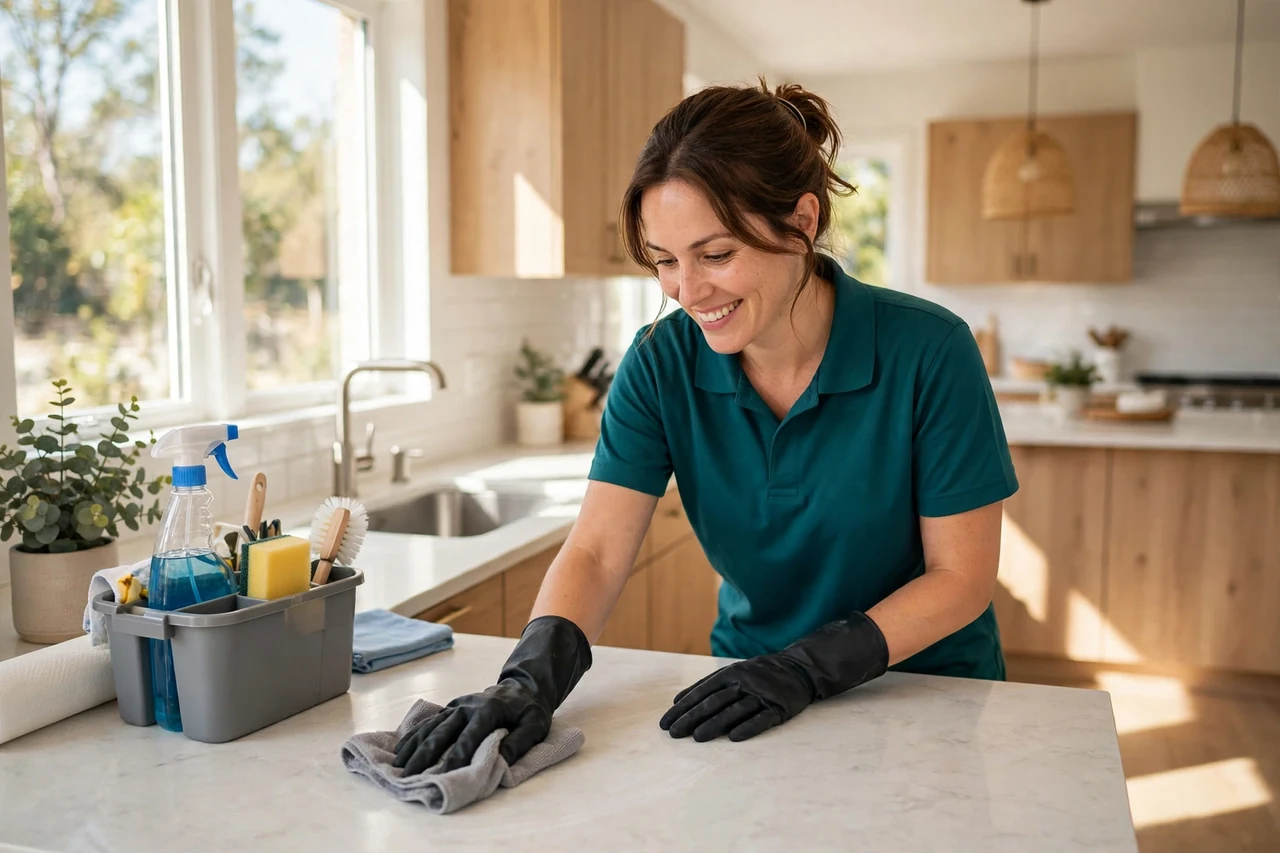
Inviting someone into your home to clean it is an act of trust. A good house cleaning service gives you back hours every week, keeps your home consistently fresh, and never leaves you wondering what was actually done. A bad one leaves streaked mirrors, damaged surfaces, and the uneasy feeling that you paid for very little. The difference usually comes down to the checks you make before you book, not luck. This guide walks through exactly what to look for — pricing models, insurance, supplies, and the questions that separate a professional service from a risky gamble — so your first booking is the right one.
Decide What Kind of Clean You Actually Need
Cleaning services generally sell three levels of work. A standard or regular clean covers kitchens, bathrooms, floors, dusting, and surfaces — the maintenance work that keeps a lived-in home under control. A deep clean goes further: inside the oven and fridge, baseboards, window tracks, grout, and all the places that quietly collect months of grime. Most companies recommend a deep clean first, then regular visits to maintain it. Move-in and move-out cleans are a third category, done on empty homes and priced accordingly. Be honest about your home’s current state when you ask for quotes; understating the work leads to a rushed job and a disappointed cleaner, while a clear description gets you an accurate price and a realistic time slot.
Understand How Pricing Works
Most services price by the hour, by the visit based on home size, or by a flat quote after seeing the property. Hourly pricing typically runs lower for recurring visits because the home stays cleaner between appointments. Ask exactly what the quoted price includes and, just as importantly, what it excludes: laundry, interior windows, and appliance interiors are common add-ons that surprise people on the first invoice. Get quotes from at least three services and compare them on the same scope of work — the cheapest quote often turns out to be the one that quietly skipped half the checklist. If a price seems far below the local average, treat that as a question to ask, not a bargain to grab.
Check Insurance, Bonding, and Background Checks
This is the step people skip and later regret. A reputable house cleaning service carries liability insurance, which covers accidental damage — the knocked-over vase, the scratched hardwood, the broken blind. Bonding protects you in the rare case of theft. Ask for proof of both, and ask whether the cleaners are employees or independent contractors, because that affects who is responsible if something goes wrong. Also ask how cleaners are vetted: background checks and training standards are normal questions, and a professional company will answer them without hesitation. An individual cleaner you hire directly can be excellent, but understand that the insurance and backup coverage a company provides usually does not come with them.
Ask About Supplies, Products, and Your Preferences
Some services bring all their own supplies and equipment; others use yours. Neither is automatically better, but you should know which you are paying for. If anyone in your home has allergies, asthma, a baby, or pets, ask about the products used and whether the service can switch to gentler or fragrance-free options. If you have delicate surfaces — marble counters, hardwood that cannot take steam, cast iron, antique furniture — say so in advance and confirm the cleaner knows how to handle them. A good service records these preferences on your file so every visit respects them, whoever shows up that day.
Read Reviews the Smart Way
Star ratings alone tell you little. Read the recent reviews and look for patterns: Do people praise the same cleaner by name? Do complaints mention the same problem — lateness, missed spots, poor communication — again and again? A company with hundreds of reviews and a consistent response to criticism is a safer bet than one with a perfect score from twelve reviews written in the same month. Pay attention to how the business replies to negative reviews; a calm, solution-focused reply tells you how they will treat you if something goes wrong in your home.
Clarify the Practical Details Before the First Visit
Sort out the logistics in writing: how the cleaner gets in if you are out, where to park, what to do with pets, and how scheduling and cancellations work. Ask what happens if you are unhappy with a clean — many good services offer a re-clean guarantee within 24 hours, and that policy says a lot about their confidence. Confirm how payment works and whether tipping is expected. If you are preparing for a bigger project, like getting a home ready to sell, pairing a professional clean with the steps in home staging can make a remarkable difference to how the place photographs and shows.
How Often Should You Book?
Frequency depends on your household more than on any rule. Homes with young children, pets that shed, or someone with allergies usually benefit from weekly or every-two-week visits, because dirt and dander never get the chance to build up. Smaller households, couples who travel often, and tidy minimalists often find a monthly visit with a quarterly deep clean is plenty. Think about your own routines too: if you cook most nights, the kitchen needs attention more often than the guest room does. Many services let you rotate focus areas — bathrooms and kitchen every visit, bedrooms and living areas on alternate visits — which keeps costs down without letting any room slide. And if you are settling into a new place, the order of operations in our first-time home buyer guide helps you decide what to clean, fix, and set up first, while renting vs buying a home is worth reading if you are weighing whether the home you are cleaning should be yours to own.
Start Small, Then Commit
If you are unsure, book a one-off deep clean before signing up for a recurring schedule. It lets you judge the quality, the communication, and the little details — shoes off at the door, items replaced where they were found, a note about anything that needs attention. A service that handles the trial well will almost always handle the routine well. Once you find that standard, recurring visits every two weeks keep a home at the level most families want without the cost of weekly appointments. Choose carefully at the start, and a house cleaning service becomes one of those quiet upgrades that improves every single week. It quietly improves other routines too: a clean kitchen is where meal prep for beginners actually gets done instead of postponed, and waking up in a tidy home makes your morning routine far easier to keep.