Weeknight cooking loses its appeal somewhere between a long day and an empty fridge. That is exactly the problem meal prep for beginners is designed to solve: a couple of relaxed hours in the kitchen once a week, in exchange for dinners that mostly assemble themselves. You do not need matching containers in twelve sizes, a chest freezer, or the discipline of a professional athlete. You need a short plan, a sensible shopping list, and a few reliable building blocks you can mix and match. This guide shows you the simple method, a starter menu, and the storage rules that keep everything safe and appetising.
What Meal Prep Really Means (and What It Does Not)
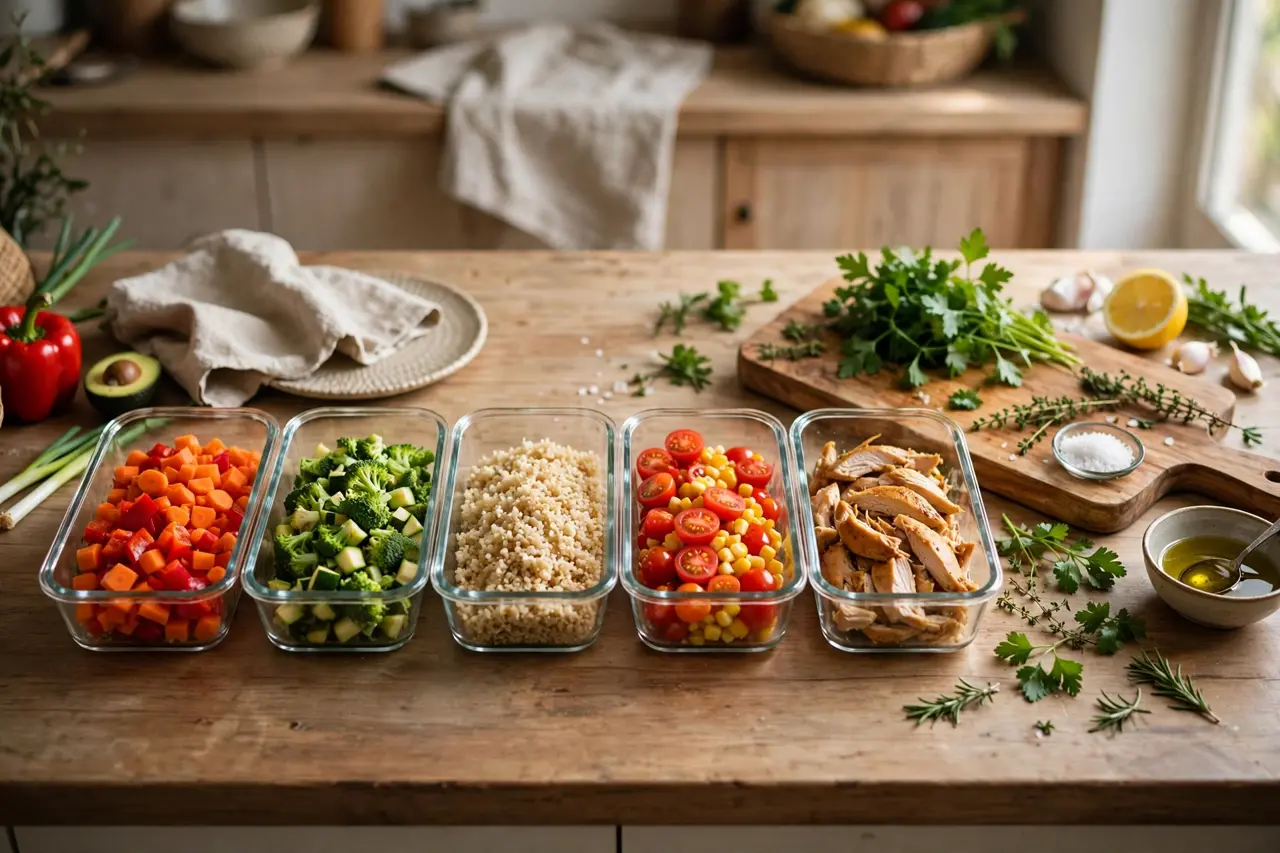
Meal prep simply means preparing food ahead in some form. For some people that means complete boxed meals; for most beginners, a better approach is “ingredient prep” — cooking versatile components (a grain, a protein or two, roasted vegetables, a sauce) that combine into different meals across the week. This keeps evenings flexible and avoids the boredom of eating the identical dinner four nights running. Think of it the way you might think of a capsule wardrobe: a small set of well-chosen pieces that combine into many outfits. Your fridge can work exactly the same way.
It also does not mean cooking everything on Sunday. Many people prefer two shorter sessions — one at the weekend, one midweek — so nothing sits in the fridge too long and the second half of the week still tastes fresh.
Meal Prep for Beginners: The Simple Five-Step Method
Step one: plan a short menu. Choose two or three dinners, one lunch option and one breakfast you can repeat. Write them down; a plan on paper ends the nightly “what’s for dinner” debate. Step two: shop once, from a list. Build the list from your menu, check what you already have, and buy ingredients that serve more than one meal — the same chicken can star in Monday’s grain bowls and Wednesday’s wraps. Planning ahead like this is the same habit behind learning how to pack light: decide deliberately once, and everything afterwards gets easier.
Step three: prep in a smart order. Start whatever takes longest — grains and roasting vegetables — then cook proteins while those are in the oven, and wash and chop raw items last. Step four: store properly (more on safety below). Step five: assemble, don’t re-cook. On the night, you are reheating and combining, adding something fresh — herbs, a squeeze of lemon, a handful of salad — so the meal tastes made, not merely warmed.
What You Need Before Your First Session
Very little, honestly. A set of airtight containers in two or three sizes — glass if you plan to reheat in them, good-quality plastic if weight and cupboard space matter — plus one large rimmed sheet pan, a big pot with a lid, a sharp knife you keep sharp, and a roll of masking tape with a marker for labels. A slow cooker, an air fryer or a rice cooker can all help if you already own them, but none is required, and buying gadgets before the habit sticks is the easiest way to spend money without changing a single dinner. Start with what your kitchen already has; after a month of prepping you will know exactly which one tool, if any, would genuinely earn its shelf space.
A Beginner-Friendly Sample Menu
Here is a realistic first week. Cook a large pot of rice or quinoa, a tray of seasoned chicken thighs (or chickpeas for a vegetarian version), and a big sheet pan of chopped peppers, courgettes, red onion and sweet potato. Make one sauce — a yoghurt-and-herb dressing, or a simple peanut sauce — and keep salad leaves, wraps and eggs on hand. Monday becomes grain bowls with chicken, vegetables and sauce. Tuesday turns the same chicken into wraps with salad and dressing. Wednesday is a quick fried rice with the remaining grains, vegetables and an egg. Thursday, the leftover vegetables blend into a soup or fold into an omelette. Breakfasts are overnight oats or eggs, which pair naturally with the morning routine ideas that make weekdays start calmer. Four different-feeling dinners, one cooking session.
Storage and Food Safety Basics
Good storage is what makes meal prep for beginners safe rather than risky. Cool cooked food quickly and refrigerate it within two hours; shallow containers cool fastest. Keep your fridge at or below 5°C (40°F), store cooked items above raw ones, and label containers with the day you cooked them — memory is unreliable by Thursday. As a general rule, cooked rice, meats and roasted vegetables are best eaten within three to four days, which is another argument for the midweek mini-prep. Freeze what you will not reach: soups, sauces, grains and cooked proteins all freeze well for two to three months. Reheat food until it is steaming hot all the way through, and only reheat rice and leftovers once. When in doubt, throw it out — no saved dinner is worth a bad night.
How to Avoid Boredom and Waste
The two reasons people quit meal prep are monotony and a fridge full of good intentions. Fight monotony with sauces and toppings rather than entirely new recipes: the same base becomes Mediterranean with olives and feta-style cheese, or East Asian with soy, ginger and sesame. Keep one “wild card” meal each week that uses whatever is left — fried rice, soup, frittata or a big salad — because using leftovers well is really an exercise in creativity in problem-solving applied to your kitchen. And buy with the same restraint you would bring to travelling responsibly: the mindset behind eco-tourism — take only what you need, waste as little as possible — works just as well at the market as it does on the road. Start smaller than you think: prepping just three dinners is a success, not a failure.
Mistakes Every Beginner Makes
The classic mistake is ambition: seven different recipes, five new ingredients each, and a four-hour Sunday that guarantees you never repeat the experiment. The second is prepping complete identical meals and hating them by day three. The third is neglecting storage rules, and the fourth is forgetting the freezer, your best tool for rescuing surplus food. Keep your first attempts deliberately modest, repeat what works, and let the habit grow at its own pace.
Meal prep for beginners succeeds when it stays simple: a short menu, one shopping trip, a few versatile building blocks, and safe storage. Within a few weeks you will notice the real rewards — calmer evenings, fewer impulse takeaways, and a fridge that answers the dinner question before you even ask it.