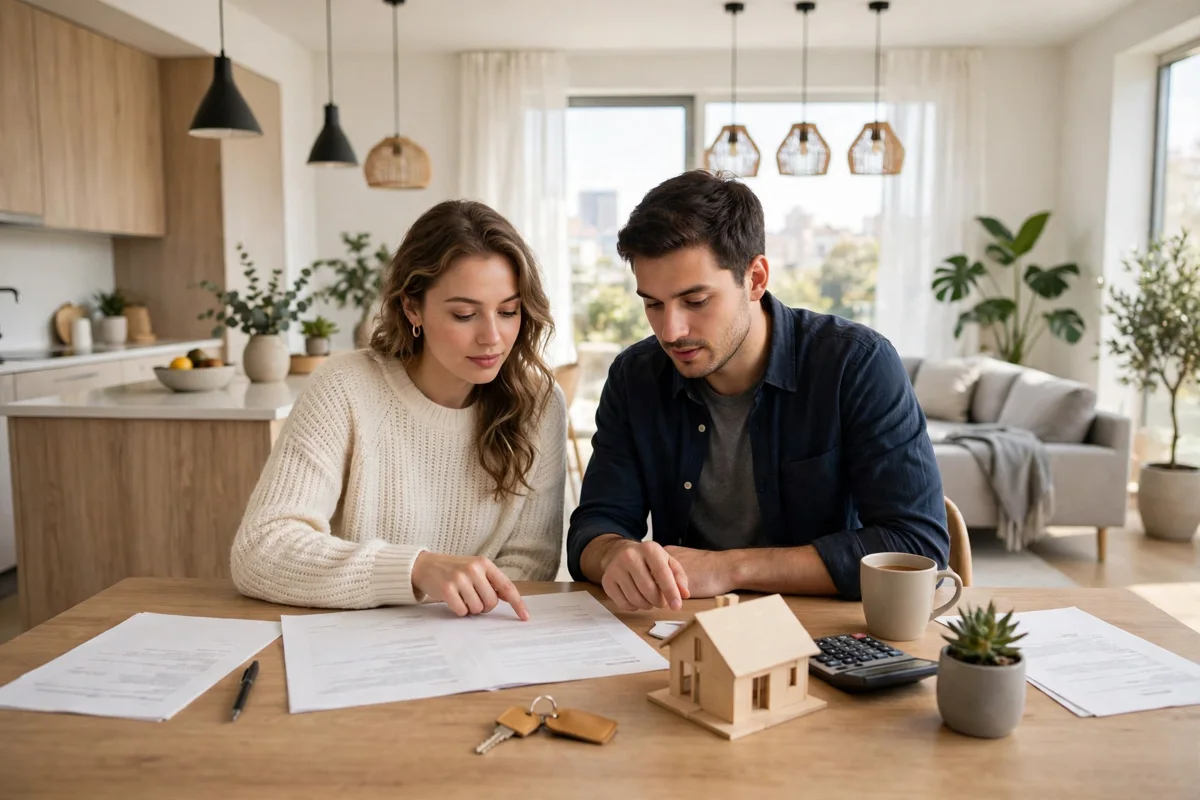
Almost everyone who rents eventually faces the same question at a kitchen table with a calculator nearby: should we keep renting, or is it time to buy? The honest answer to renting vs buying a home is rarely about which option is “better” in general. It is about your time horizon, your cash position and how much flexibility your life needs right now. This guide walks through the questions that actually decide it, so the choice rests on your numbers rather than on pressure or habit.
The Time Horizon Question Comes First
Buying a home carries heavy upfront costs: a deposit, legal and lender fees, taxes, moving expenses and the small repairs every new owner discovers in the first month. Selling carries costs too. Those transaction expenses mean a purchase usually needs years, not months, to break even against renting the same home. If your work, family plans or studies might move you within a short window, renting protects your options. If you can genuinely see yourself in the same neighbourhood for the long term, buying has time to reward you. No other variable matters as much as this one, so answer it honestly before touching a mortgage calculator.
Renting vs Buying a Home: The Real Cost Comparison
Compare total costs, not headline payments. A mortgage payment is only part of ownership: add property taxes, insurance, maintenance, repairs and the opportunity cost of the deposit money that could otherwise stay invested or saved. Renting has its own full picture too: the rent itself, renter’s insurance, and the risk of increases or a landlord selling up. A useful discipline is to write both columns for a full year, using your real local figures, and then project them across the years you expect to stay. Understanding how professionals value property sharpens the buying side of the comparison; our explainer on BOV meaning in real estate shows how broker price opinions are put together and where they can mislead. The answer often surprises people in both directions, which is exactly why the exercise is worth doing with real numbers instead of rules of thumb.
What Ownership Gives You That Rent Cannot
Owning builds equity with every payment, slowly converting housing costs into an asset you hold. It also buys control: you can renovate, keep pets, paint walls and stay put without asking permission or fearing a non-renewed lease. And when the day eventually comes to sell, that control pays again; our guide on how to stage your home for a faster sale shows how presentation turns into price. For many households, that stability is the real product, and it is worth paying for. Ownership also fixes a large part of your housing cost against inflation in a way renting cannot, since a fixed-rate mortgage payment stays level while rents around you climb over the years.
What Renting Gives You That Ownership Cannot
Renting buys flexibility and simplicity. When the boiler fails, it is the landlord’s problem and the landlord’s bill. Your deposit-equivalent savings stay liquid for opportunities, emergencies or a business idea. Moving for a job, a relationship or a better school district is a matter of notice periods, not a sales process. For people whose careers are still mobile, whose income varies, or who simply value a low-maintenance life, renting is not a failed version of buying; it is a deliberate, rational choice that keeps options open.
The Questions to Answer Before You Decide
Work through these in order. How long will you realistically stay? How stable is your income across the next few years? How large is your emergency fund after a deposit, not before it? How do local prices compare with local rents for the kind of home you actually want, not the kind you would settle for? And how much do you value control over your space versus freedom from maintenance? Your answers form a profile, and the profile, not the market headlines, should make the decision. Revisit the exercise whenever a big life change appears on the horizon.
A Middle Path Many Households Miss
The choice is not always binary. Some households rent in the expensive city where they work and buy in the affordable town where they plan to retire. Others buy a smaller place than they could stretch for, keeping payments near their old rent and banking the difference. Studying one specific market in depth, the way our real estate guide to Elanora does, often reveals these middle paths that national averages hide. Some rent deliberately for two more years while building a larger deposit and a calmer decision. The right answer to renting vs buying a home is the one that fits the life you are actually living this decade, and it is allowed to change as that life does.
Saving for a Deposit Without Pausing Your Life
If buying wins your analysis but the deposit is years away, the saving plan matters as much as the decision. Treat the deposit as a fixed bill paid to your future self on payday, not as whatever survives the month. Keep it in a separate account you do not see daily, and automate the transfer so motivation is never part of the system. Track the target as a percentage of a realistic home price in the area you actually want, and update it yearly rather than monthly; house prices and your salary both move, and a yearly review keeps the goal honest without turning it into a source of weekly stress. Many households find the deposit arrives sooner than feared once rent, saving and spending each have a defined job in the budget.
The Bottom Line
Renting vs buying a home is a personal finance decision disguised as a housing decision. Stay long, buy carefully, and ownership usually rewards you. Stay flexible, keep costs honest, and renting serves you just as well. Run your own numbers across your own time horizon, weigh stability against freedom with clear eyes, and you will make the decision your future self would have recommended.