There is a special kind of freedom in walking off a plane with nothing but a carry-on: no queue at the baggage carousel, no lost luggage, no dragging a heavy suitcase up three flights of hotel stairs. Learning how to pack light is what makes that freedom possible, and it is a skill anyone can pick up. You do not need expensive gear or extreme minimalism. You need a simple system: the right bag, fewer and smarter clothes, and a repeatable way of putting it all together. This guide walks you through that system step by step, so your next trip — whether it is a weekend city break or a three-week adventure — fits neatly into one bag.
How to Pack Light Starts With the Right Bag
Your bag sets the limit, and the limit is your friend. A carry-on sized bag of around 40 litres forces the decisions that teach you how to pack light far better than willpower alone. Choose a soft-sided bag or a travel backpack if you want to squeeze it into overhead bins, or a small wheeled case if you prefer to roll. Check your airline’s size limits before you buy, because a bag that gets gate-checked defeats the purpose. Even travellers who enjoy luxury travel experiences worth splurging on often find that a single well-chosen bag makes the whole trip feel more premium, not less: less time packing, less time waiting, and less stuff to keep track of.
Weigh your bag empty, too. Some carry-ons weigh nearly as much as the clothes you plan to put in them. A lighter shell leaves more allowance for what actually matters, and your shoulders will thank you on long walks between terminals.
Build a Small Capsule Travel Wardrobe
The heart of packing light is a wardrobe where everything works together. Pick a simple colour palette — two neutrals and one accent colour, for example — so every top matches every bottom. If you have ever read about how to build a capsule wardrobe for everyday life, the travel version is the same idea in miniature: fewer pieces, endless combinations. Five tops, three bottoms and one warm layer can cover two weeks when each item earns its place.
Choose fabrics that forgive travel. Merino wool, synthetics and linen blends resist odours, dry overnight after a sink wash and come out of the bag with fewer creases. Cotton is comfortable but heavy and slow to dry, so limit it to one or two favourites. Lay everything on the bed before it goes in the bag and remove one item in three — that single edit is where most people finally learn how to pack light in practice, not just in theory.
Simple Packing Formulas That Actually Work
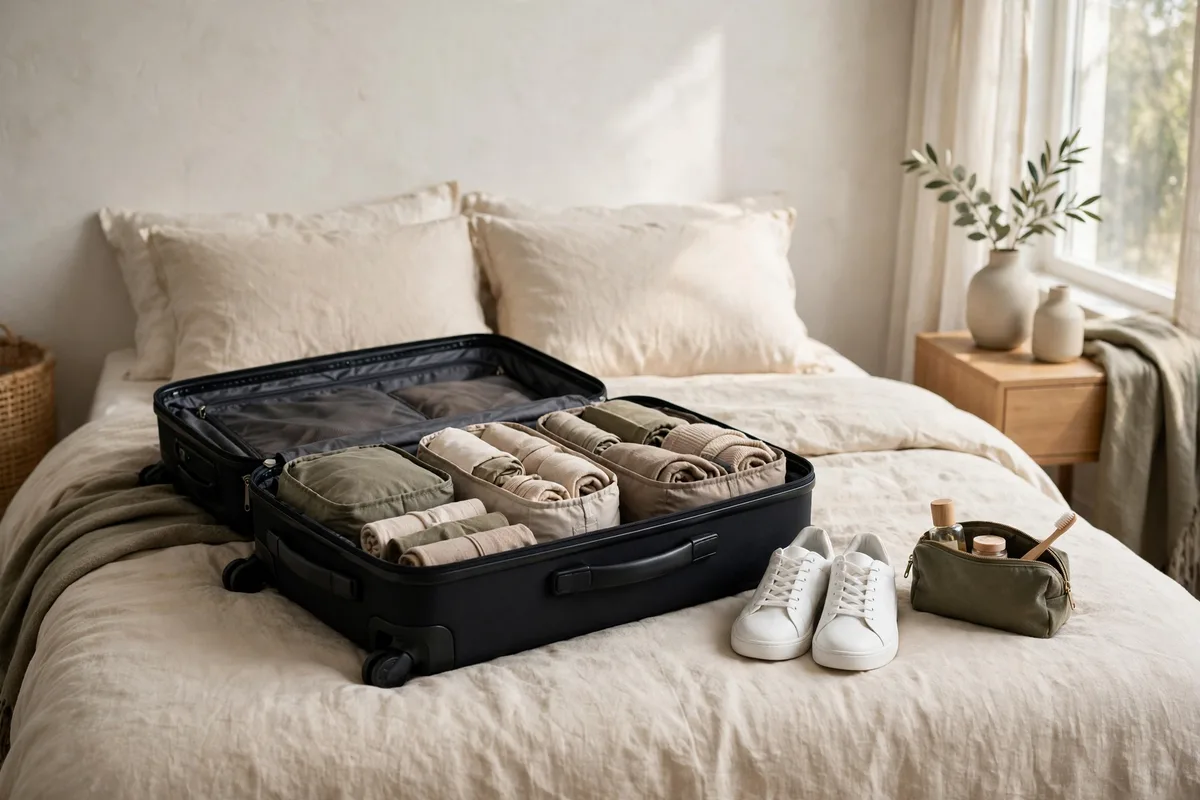
If counting items feels vague, use a formula. A popular approach is 5-4-3-2-1: five sets of underwear and socks, four tops, three bottoms, two pairs of shoes (one worn), and one hat or accessory. Adjust the numbers to your trip, but keep the principle — a fixed, small allowance for each category. Shoes deserve special attention because they eat space faster than anything else. Wear your bulkiest pair in transit and pack one versatile second pair, stuffed with socks or chargers so no space is wasted.
Planning outfits instead of individual items also helps. Think in complete days: Monday’s outfit, Tuesday’s outfit, each sharing pieces with the others. Adventurous itineraries, like the ones in our guide to adventure destinations for thrill seekers, reward this thinking because conditions change and layers matter more than spare outfits.
One more habit separates experienced light packers from beginners: planning a laundry moment. A travel-sized soap and a hotel sink can refresh tops and underwear halfway through a longer trip, which means you pack for one week even when you travel for three. Travellers who learn how to pack light almost always rely on washing a few items rather than carrying spares of everything. If laundry feels like a chore, remember it takes ten minutes in the evening and saves you kilos every single day — a trade most people gladly make after their first heavy-suitcase trip.
Roll, Fold or Compress: Techniques That Save Space
How you pack matters almost as much as what you pack. Rolling soft clothes tightly saves space and reduces creasing, and rolled items fill the awkward gaps around shoes and corners. Packing cubes add structure: one cube for tops, one for bottoms, one for small items, so you can find things without unpacking the whole bag. Compression cubes go a step further and squeeze out air, which is gold for jumpers and jackets.
Heavy items belong near the wheels or against your back, depending on the bag, so the weight sits comfortably. Keep a small pouch for things you need in transit — documents, earbuds, a pen, medication — at the top or in an outside pocket. When you know how to pack light and stay organised, airport security stops being a scramble and becomes a two-minute routine.
Toiletries, Tech and the Personal Item
Liquids are the classic carry-on trap. Decant your products into small refillable bottles instead of carrying full-size containers; it is lighter, passes security limits, and fits the refill-and-reuse mindset behind eco-friendly travel. Solid alternatives — shampoo bars, solid perfume, toothpaste tablets — remove the liquids problem entirely and never leak.
For tech, one multi-port charger and two cables can replace a nest of adapters. Download films, maps and boarding passes before you leave so a flat battery or poor signal cannot derail you. Your personal item — the small bag that goes under the seat — should carry everything you would need if your main bag were checked after all: documents, medication, a change of underwear, chargers and valuables. Treat it as your survival kit and your main bag becomes much less stressful to pack.
A Carry-On Packing Checklist You Can Reuse
Finally, turn your system into a checklist and reuse it for every trip. Ours looks like this: clothes for the formula above, one warm layer, sleepwear, underwear and socks, toiletries in a clear pouch, charger kit, documents, and one “just in case” item — never three. Before a big drive, compare it with the routes in our collection of the most scenic road trips around the world: road trips tempt you to fill the boot, but the same carry-on discipline keeps the car comfortable and the stops easy.
Packing light is not about deprivation; it is about travelling with exactly what serves the trip. It pairs naturally with the mindset of eco-tourism and travelling with a purpose — less weight, less waste, more attention on where you actually are. Start with one short trip, notice how little of your old packing you missed, and adjust the checklist. A few journeys from now, you will wonder why you ever travelled any other way.