
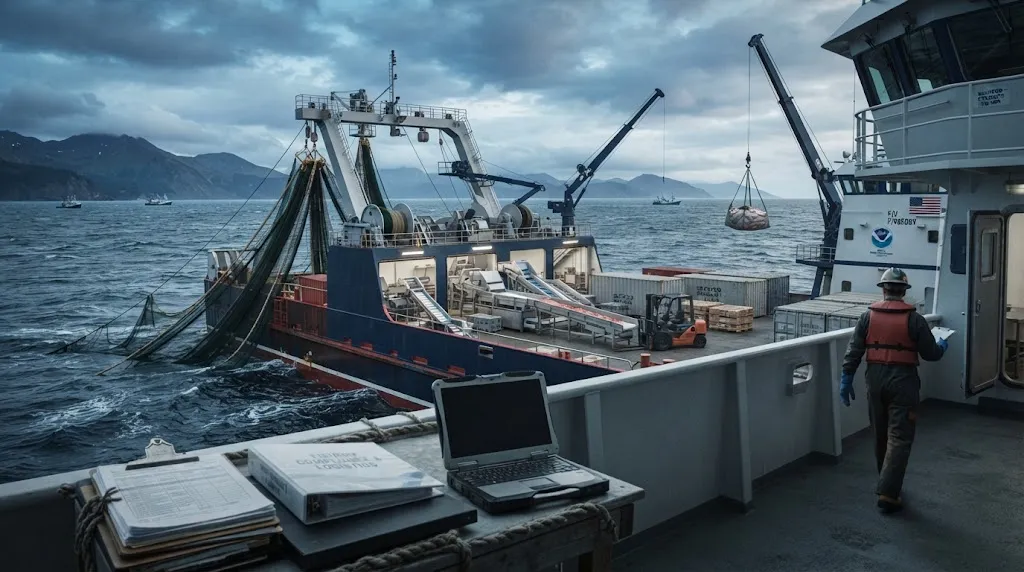
Northline Seafoods describes itself as a company focused on wild Alaskan salmon and an integrated catch-to-consumer supply chain. Its model combines buying, freezing, transporting, and storing salmon through a floating processing platform. That approach creates opportunities for efficiency, but it also introduces legal and operational responsibilities that traditional shore-based processors may manage differently.
What Legal Issue Involved Northline Seafoods?
One of the most significant publicly documented matters involved Leo’s Welding and Fabrication LLC and the P/V Hannah. A federal case filed in the Western District of Washington in April 2025 identified Sayak Logistics LLC, doing business as Northline Seafoods, as a defendant in a marine contract and foreclosure action.
The dispute concerned allegations surrounding payment for work performed on the processing vessel. The case resulted in a court-approved bond of approximately $1.378 million being used in connection with the vessel’s release. The parties later reached a settlement, and the case was voluntarily dismissed in September 2025.
Importantly, a lawsuit or lien dispute does not automatically establish that a company committed wrongdoing. The Northline situation is better understood as an example of how large marine construction and processing projects can create substantial contractual and financial exposure.
Why Marine Contracts Can Become High-Risk
Large vessels and floating processing facilities involve multiple contractors, engineers, suppliers, fabricators, insurers, lenders, and operators. A disagreement over payment, scope of work, change orders, or completion standards can quickly become more complicated than a normal commercial invoice dispute.
This is where lessons from modern logistics and supply-chain management become relevant. Every party should understand who is responsible for a particular deliverable, when payment becomes due, how additional work is authorized, and what documentation is required if the project changes.
Contract Documentation Is a Major Protection
One of the clearest lessons from disputes involving complex industrial projects is the importance of written documentation. Original contracts should clearly identify pricing, milestones, specifications, payment schedules, warranties, change-order procedures, and dispute-resolution mechanisms.
Businesses should also avoid relying heavily on informal agreements when substantial additional work is requested. Written approvals, revised scopes, invoices, inspection records, and correspondence can become critical if the parties later disagree.
Companies managing multiple suppliers can also benefit from principles discussed in supply-chain efficiency and logistics reliability.
Insurance and Risk Management Matter
Seafood processors face risks that extend beyond contracts. Property damage, vessel incidents, equipment failures, cargo losses, worker injuries, environmental events, and third-party claims can all create financial exposure.
That makes commercial insurance an important component of risk planning. FreshDell’s guides on business insurance and coverage decisions, insurance planning, and insurance protection provide broader context for understanding why organizations need to match coverage with their actual risk profile.
A separate 2022 federal case also identified insurers as plaintiffs in litigation involving Northline Seafoods as an insured/subrogation interest, demonstrating that insurance-related disputes can arise independently of a company’s primary operations.
Regulatory Compliance in the Seafood Industry
Legal compliance for seafood businesses goes beyond avoiding lawsuits. Operators must consider seafood safety, traceability, labeling, environmental requirements, employment rules, vessel regulations, transportation standards, and applicable federal and state requirements.
Northline’s current public materials emphasize traceability and responsible wild-salmon operations. The company has also appeared in certification records for Alaska salmon, showing that certification and chain-of-custody processes can form an important part of seafood compliance.
For companies operating across fishing, processing, storage, and distribution, compliance should be treated as an ongoing operational system rather than a one-time checklist.
Supply-Chain Risk Can Become Legal Risk
A seafood company depends on a connected chain of fishermen, vessels, processors, contractors, cold-storage facilities, transportation providers, distributors, and customers. A failure in one area can create contractual consequences elsewhere.
For that reason, seafood operators can apply the same principles found in modern warehousing and distribution and business growth planning. Vendor screening, contingency planning, documented responsibilities, and financial controls can reduce the chance that an operational problem becomes a legal crisis.
Financial Stability Is Another Risk Factor
Capital-intensive seafood operations require substantial investment in vessels, refrigeration, processing equipment, fuel, maintenance, labor, transportation, and infrastructure. Cash-flow pressure can make contractor and supplier relationships more difficult to manage.
Businesses should therefore monitor working capital, payment obligations, insurance requirements, debt exposure, and major project commitments. Broader lessons from business financing can help explain why financial planning is closely connected to operational resilience.
What Businesses Can Learn From Northline Seafoods
The Northline situation provides several practical lessons for companies involved in marine operations or other capital-intensive industries:
- Put major agreements and changes in writing.
- Define payment terms and project milestones clearly.
- Document contractor performance and approvals.
- Review insurance before major projects begin.
- Maintain traceability and regulatory records.
- Identify supply-chain dependencies before they become critical.
- Maintain sufficient financial reserves for unexpected disputes.
- Use qualified legal counsel for significant maritime contracts.
Companies can also strengthen their broader business planning through resources covering business growth and economic impact and business transformation.
Is Northline Seafoods Still Operating?
Northline Seafoods continues to maintain an active public presence and describes ongoing wild Alaskan salmon operations. In 2026, reports also covered arrangements involving Northline and Silver Bay Seafoods in Bristol Bay. These developments illustrate that the company remains part of an evolving Alaska seafood market.
For readers researching Northline Seafoods legal issues, the most important distinction is between documented court proceedings and assumptions about the company. A legal dispute can reveal areas of business risk without proving broader misconduct.
Final Thoughts on Northline Seafoods Legal Issues
Northline Seafoods provides an interesting example of the legal complexity that can accompany innovation in the seafood industry. Its floating processing model combines marine operations, seafood processing, logistics, contracting, insurance, and regulatory responsibilities in one interconnected system.
The documented dispute involving the Hannah ultimately moved toward settlement rather than becoming a determination of wrongdoing. For other seafood and marine businesses, the larger lesson is straightforward: strong contracts, detailed records, appropriate insurance, financial controls, regulatory compliance, and proactive risk management can make a significant difference when unexpected problems arise.
Businesses interested in legal and operational risk can also explore FreshDell’s guide to assumpsit and contractual obligations, legal forms and documentation, legal terminology, and risk and liability insurance.
Frequently Asked Questions
What were the main Northline Seafoods legal issues?
A major publicly documented matter involved a 2025 marine contract and lien dispute concerning the processing vessel Hannah. The parties later settled and the case was voluntarily dismissed.
Was Northline Seafoods found guilty of wrongdoing?
The documented case was a civil marine contract dispute, not a criminal conviction. The available court record shows that the parties reached a settlement and the case was dismissed.
Why is compliance important for seafood companies?
Seafood businesses operate across food safety, traceability, labeling, environmental, maritime, employment, transportation, and commercial requirements. Strong compliance systems help reduce legal and operational exposure.
What is the biggest business lesson?
Complex operations require equally strong documentation. Clear contracts, written change orders, insurance, financial controls, and detailed compliance records can help prevent operational disagreements from becoming major legal disputes.