

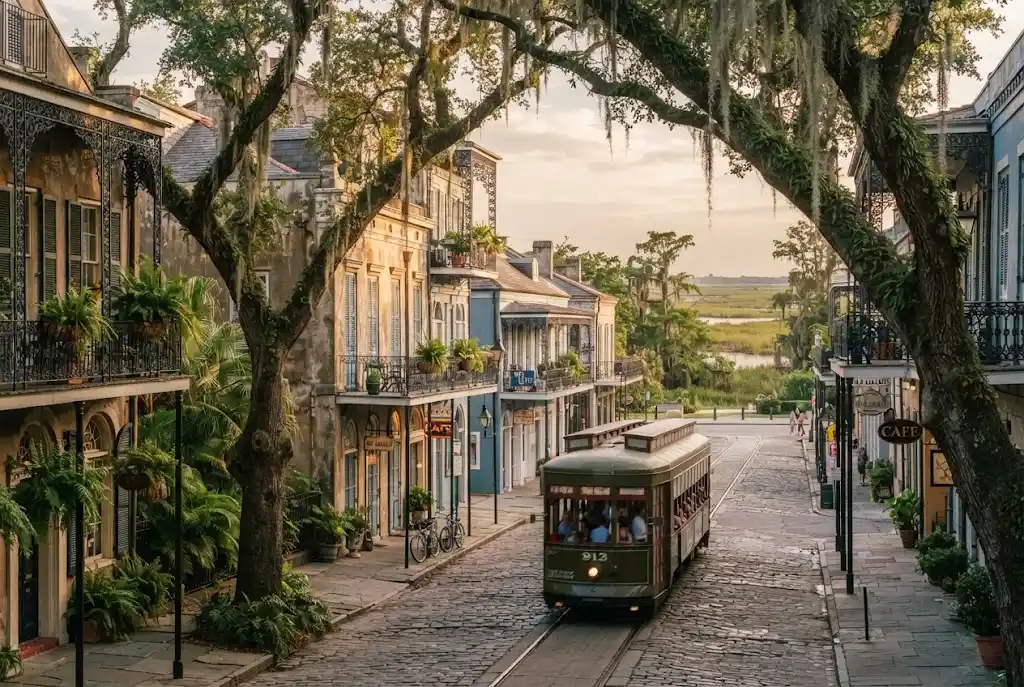
This guide highlights destinations that can help you plan a Louisiana trip around your interests, including history, food, architecture, nature, family activities, and road-trip experiences.
1. New Orleans
New Orleans is the natural starting point for many Louisiana trips. The city is known for its distinctive architecture, Creole and Cajun culinary influences, live music, festivals, and historic neighborhoods.
The French Quarter is one of the city’s defining areas, with historic buildings, courtyards, restaurants, shops, and a lively atmosphere. Jackson Square, the French Market, the Mississippi Riverfront, and nearby cultural attractions make this part of the city particularly useful for first-time visitors.
Music is another major reason to visit. New Orleans has a deep connection with jazz, while venues throughout the city showcase blues, funk, brass bands, and other local sounds.
If you want to explore more destinations across the country after New Orleans, our guide to unique places to visit in the United States provides additional ideas.
2. Baton Rouge
Louisiana’s capital offers a different experience from New Orleans, with a strong focus on government, history, museums, riverfront attractions, and Louisiana State University culture.
The Louisiana State Capitol and Old State Capitol are two notable landmarks in the city. Capitol Park Museum adds another perspective on Louisiana history and culture, while the Mississippi River helps shape the city’s landscape.
Baton Rouge can also work well for travelers interested in food and local culture. Cajun and Creole influences appear throughout the city’s restaurants, while LSU brings a major sports and college atmosphere to the area.
3. Lafayette
Lafayette is a strong choice for travelers who want to experience the heart of Cajun Country. The city and surrounding region are closely associated with Cajun food, music, festivals, and cultural traditions.
One of the most useful places to learn about the region is Vermilionville, a living history and folklife park that explores local heritage. Lafayette is also a convenient base for exploring nearby communities and experiencing Cajun cuisine.
Food should be part of any Lafayette itinerary. Gumbo, boudin, crawfish dishes, and other regional specialties help distinguish south Louisiana from other parts of the country.
4. Shreveport and Bossier City
In northwest Louisiana, Shreveport and Bossier City form a connected destination along the Red River. The area combines museums, live entertainment, family attractions, shopping, dining, and riverfront activities.
Travelers can explore the Shreveport Aquarium, Louisiana State Exhibit Museum, R.W. Norton Art Gallery, and the Louisiana Boardwalk. The region also has a strong entertainment scene, including casino resorts and live performances.
For families, interactive attractions such as Sci-Port Discovery Center can add an educational element to a Louisiana road trip.
5. Lake Charles
Lake Charles blends Cajun and Creole culture with outdoor recreation, festivals, historic architecture, and access to southwest Louisiana’s coastal landscapes.
Downtown Lake Charles and the Charpentier Historic District are worthwhile stops for travelers interested in architecture and local history. The city is also a practical gateway to the Creole Nature Trail All-American Road, where visitors can experience coastal marshes, wildlife habitats, and Gulf landscapes.
Lake Charles is particularly appealing if you want to combine city attractions with a nature-focused road trip.
6. Grand Isle
Grand Isle provides a very different side of Louisiana. Located along the Gulf Coast, this barrier-island community is known for beaches, fishing, birding, boating, and coastal scenery.
It is a useful destination for travelers who want to add time near the water to a Louisiana itinerary. The experience is more focused on outdoor recreation than the historic architecture and urban attractions found in New Orleans or Baton Rouge.
Because coastal conditions can change, check current local advisories and conditions before planning activities around beaches, boating, or fishing.
7. Natchitoches
Natchitoches offers a historic small-city experience in central Louisiana. Its historic district, local architecture, and connection to the Cane River region make it a worthwhile stop for travelers who want to move beyond the state’s largest cities.
The surrounding area also provides opportunities to explore Louisiana’s plantation history and cultural heritage. Cane River Lake and nearby historic sites can be incorporated into a broader regional itinerary.
Natchitoches works particularly well as part of a road trip because it introduces a quieter side of Louisiana while still offering substantial history and sightseeing.
8. Avery Island
Avery Island is best known for its connection to TABASCO and its lush landscapes. The area provides an opportunity to combine culinary history with outdoor exploration.
Jungle Gardens offers a peaceful setting for walking and observing the area’s plant and wildlife environment. The destination can be paired with Lafayette and other Acadiana attractions to create a food-and-nature itinerary.
9. The Atchafalaya Basin
For travelers interested in wetlands and wildlife, the Atchafalaya Basin is one of the most distinctive natural areas to include in a Louisiana trip.
The basin’s waterways, cypress trees, wetlands, and wildlife habitats create an environment very different from Louisiana’s urban destinations. Guided boat and swamp tours can provide a practical way to experience this landscape while learning about the ecosystem.
Travelers who enjoy outdoor photography can also combine a Louisiana nature trip with these nature photography tips before heading into the wetlands.
10. Creole Nature Trail
The Creole Nature Trail offers one of Louisiana’s best options for a scenic road trip. Located in southwest Louisiana, the route connects coastal landscapes, marshes, wildlife areas, and communities around the Gulf.
The experience is less about checking off a single landmark and more about seeing a different side of the state. Depending on conditions and your itinerary, you may encounter opportunities for birdwatching, wildlife viewing, fishing, photography, and coastal exploration.
It is especially useful for travelers who want to balance Louisiana’s cities and cultural attractions with time outdoors.
11. St. Francisville
St. Francisville is a strong choice for travelers interested in historic homes, architecture, gardens, and the character of Louisiana’s smaller communities.
The town and surrounding area provide access to historic sites and scenic landscapes along the Mississippi River region. It can be a good addition to an itinerary focused on Louisiana history rather than nightlife or major-city attractions.
12. Poverty Point
Poverty Point in northeastern Louisiana offers a different kind of historical experience. The site is known for its remarkable ancient earthworks and provides insight into Indigenous history in the region.
For travelers interested in archaeology and the deeper history of Louisiana, Poverty Point adds an important dimension to a trip that might otherwise focus mainly on French, Spanish, Creole, Cajun, or modern American influences.
How to Choose the Best Louisiana Destinations for Your Trip
The best places to visit depend on what you want from the trip. Louisiana is large enough that trying to cover every region in one short visit can create an unnecessarily rushed itinerary.
For first-time visitors
Start with New Orleans and consider adding Baton Rouge or Lafayette. This combination provides a useful introduction to Louisiana’s food, music, architecture, history, and regional culture.
For history lovers
Prioritize New Orleans, Natchitoches, St. Francisville, river-region historic sites, and Poverty Point. These destinations reveal different periods and cultural influences that shaped the state.
For nature and wildlife
Look toward the Atchafalaya Basin, Creole Nature Trail, Grand Isle, and other wetlands and coastal areas. Outdoor conditions vary by season, so check current local information before heading out.
For food-focused trips
New Orleans, Lafayette, Baton Rouge, and southwest Louisiana are strong choices for exploring the state’s culinary traditions. Plan around local specialties rather than relying only on familiar restaurant chains.
For families
New Orleans and Shreveport-Bossier City offer a particularly broad mix of museums, aquariums, zoos, educational attractions, and outdoor activities. A family road trip can also include nature-focused stops.
If family travel is your priority, you can also explore our broader guide to places to visit in the United States with kids.
Best Time to Visit Louisiana
Spring and fall are often attractive periods for exploring Louisiana because outdoor sightseeing can be more comfortable than during the hottest and most humid parts of summer. These seasons can also coincide with festivals and cultural events, although exact schedules change from year to year.
Summer can be hot and humid, but it can still work for travelers who plan around indoor attractions, early-morning outdoor activities, and water-based recreation.
Winter can offer a different experience, particularly for visitors interested in cities, food, museums, and cultural events. Before traveling, check the current weather forecast and any destination-specific advisories.
Planning a Louisiana Road Trip
A road trip is one of the easiest ways to combine Louisiana’s major cities with smaller communities and natural areas. Instead of treating the state as one destination, divide the itinerary into regions.
- Southeast Louisiana: New Orleans and surrounding historic and cultural destinations.
- Capital region: Baton Rouge and nearby historic communities.
- Acadiana: Lafayette and the surrounding Cajun cultural region.
- Southwest Louisiana: Lake Charles and the Creole Nature Trail.
- Central and northern Louisiana: Natchitoches, Shreveport, Poverty Point, and other regional attractions.
This regional approach helps reduce unnecessary backtracking and gives each part of the trip a clear purpose.
For additional U.S. trip planning ideas, see our guides to the best places to visit in the American South and the top places to visit in the U.S. during fall.
What to Eat While Visiting Louisiana
Louisiana’s food culture is a major part of the travel experience. Depending on the region, visitors may encounter gumbo, jambalaya, crawfish dishes, boudin, po’boys, étouffée, beignets, and other local specialties.
New Orleans is particularly well known for its Creole culinary traditions, while Lafayette and surrounding Acadiana communities provide strong opportunities to explore Cajun food and regional cooking.
Rather than trying to find one definitive Louisiana dish, consider sampling different specialties in different regions. That approach makes the state’s culinary diversity part of the journey.
Louisiana Travel Tips
- Build your itinerary around regions instead of trying to cover the entire state in a short trip.
- Allow extra time for outdoor stops, especially when exploring wetlands and coastal areas.
- Check weather and local conditions before visiting beaches, wetlands, or other outdoor attractions.
- Research festival dates separately if a particular event is important to your trip.
- Try regional dishes in more than one destination to experience Louisiana’s culinary differences.
- Leave room for smaller communities instead of spending the entire trip in major cities.
Frequently Asked Questions
What is the most popular place to visit in Louisiana?
New Orleans is generally the most prominent destination for visitors because of its historic neighborhoods, music, food, festivals, architecture, and cultural attractions. However, Louisiana’s appeal extends well beyond the city.
What are the best places to visit in Louisiana for first-time visitors?
New Orleans is the strongest starting point for a first visit. Depending on the length of the trip, Lafayette, Baton Rouge, Lake Charles, or a nearby nature destination can add a broader view of Louisiana.
What part of Louisiana is best for nature?
The Atchafalaya Basin, Creole Nature Trail, Grand Isle, and other wetland and coastal areas are strong choices for travelers interested in wildlife, waterways, birding, and outdoor scenery.
Is Louisiana good for a family vacation?
Yes. Families can choose from museums, aquariums, zoos, historic attractions, outdoor areas, and educational experiences in destinations including New Orleans and Shreveport-Bossier City.
How many days do you need to explore Louisiana?
A long weekend can provide a useful introduction to one major destination, while a longer trip gives you more time to combine cities, historic communities, food destinations, and natural areas. The ideal length depends on how much of the state you want to cover.
Final Thoughts
The most popular places to visit in Louisiana are not limited to one type of destination. New Orleans brings together architecture, music, food, and history; Lafayette showcases Cajun culture; Baton Rouge adds capital-city history; Shreveport-Bossier City brings northern Louisiana’s entertainment and museums into the itinerary; and places such as the Atchafalaya Basin, Grand Isle, and the Creole Nature Trail highlight the state’s natural side.
For the best trip, choose destinations according to your interests and group them by region. That approach lets you experience more of Louisiana without turning the journey into a checklist.
For more U.S. destination inspiration, explore our guide to unique places to visit across the United States and our broader collection of adventure destinations.