

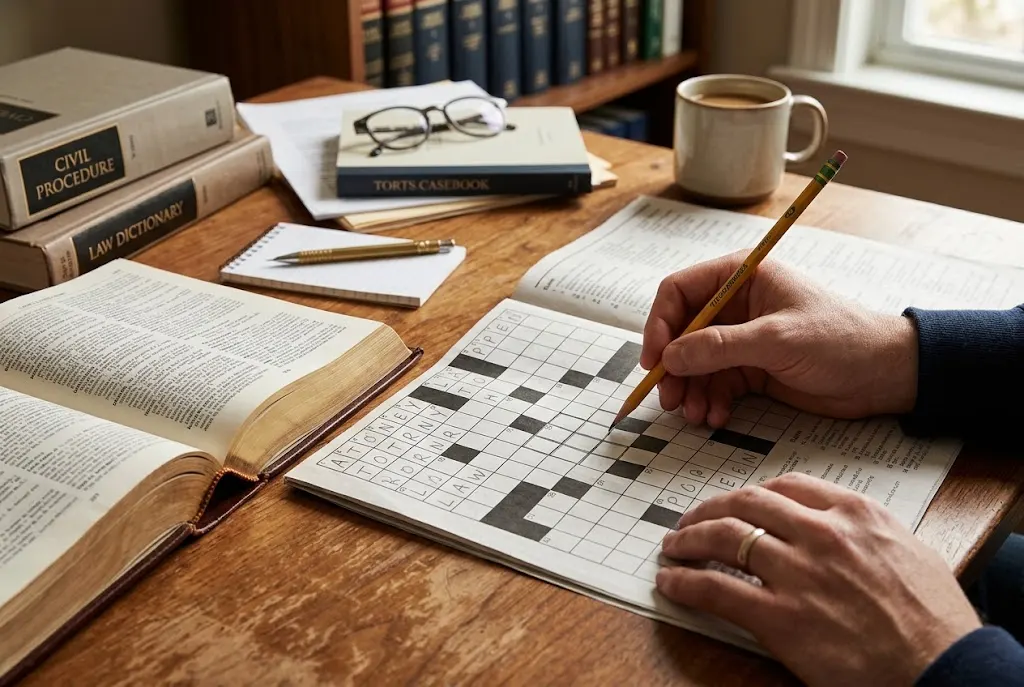
The clue is a good example of how crossword puzzles use concise definitions of specialized vocabulary. Knowing what a tort means in law can make the answer much easier to recognize instead of relying only on letter patterns.
What Is the Answer to “Legal Wrong” in a Crossword?
The most common answer is:
- TORT — 4 letters
A tort is a civil wrong that may cause injury or harm to another person and can result in civil liability. The Legal Information Institute describes torts as acts or omissions that amount to civil wrongs for which courts may impose liability.
That definition explains the direct connection between the crossword clue and the answer. When a puzzle uses “legal wrong” as a straightforward definition, TORT is usually the first four-letter possibility to consider.
Why Is TORT the Answer?
Crossword clues often use a short phrase to define a word rather than explaining the entire concept. “Legal wrong” is essentially a compact definition of a tort.
A tort is generally different from a crime. Tort law primarily concerns civil liability and remedies for people who have suffered legally recognized harm. Criminal law, by contrast, addresses offenses prosecuted by the government. Some conduct can result in both criminal and civil consequences.
The U.S. Courts glossary similarly defines a tort as a civil wrong or breach of a duty to another person.
How Many Letters Are in the Legal Wrong Crossword Answer?
The standard answer TORT contains four letters:
- T
- O
- R
- T
Letter count is one of the strongest tools for solving a crossword. If your grid requires four letters and the clue is exactly or approximately “legal wrong,” TORT should be one of your first candidates.
What Does Tort Mean in Law?
A tort is a civil wrong that gives rise to legal liability. The concept covers a broad range of conduct, including certain acts or omissions that cause legally recognized injury or harm.
Common examples include negligence, trespass, assault, battery, defamation, and certain forms of products liability. The exact elements of a tort depend on the particular claim and applicable law.
Intentional Torts
Intentional torts involve conduct in which the defendant intends the relevant act or consequence covered by the particular tort. Battery and certain forms of assault are familiar examples.
Negligence
Negligence generally involves a failure to exercise the level of reasonable care required under the circumstances. A successful negligence claim typically requires proof of the elements recognized by the applicable jurisdiction.
Strict Liability Torts
Strict liability can impose responsibility without requiring the same showing of fault associated with negligence. The applicable rules depend on the type of claim and jurisdiction.
Legal Wrong vs. Crime
The phrase “legal wrong” can be broader than the crossword answer TORT. Not every legal wrong is a tort, and not every wrongful act is treated only as a civil matter.
A tort generally concerns a civil wrong for which the injured party may seek a remedy. A crime, on the other hand, is an offense punishable under criminal law. Some actions can potentially create both civil and criminal consequences.
For crossword purposes, however, the distinction is useful because it helps explain why TORT is a more precise four-letter answer than words such as “crime.”
Legal Wrong Crossword Solving Strategy
If you encounter this clue in a crossword, you can solve it efficiently by combining the definition with the available letter pattern.
1. Count the Squares
Start by determining how many letters the answer requires. “Legal wrong” is commonly associated with the four-letter answer TORT. Crossword databases continue to record the clue with this solution.
2. Look at the Crossing Letters
Crossing answers can confirm the solution. If the grid gives you letters such as T-O-R-T, the answer becomes straightforward.
3. Think in Definitions
Ask what legal term can mean a civil wrong. That definition points directly toward “tort.” This is often more effective than trying random words that merely relate to law.
4. Watch for the Singular Form
If the clue says “legal wrong,” the singular answer is generally TORT. A clue referring to multiple legal wrongs may instead require TORTS, depending on the puzzle’s letter count.
Common Crossword Clues Related to TORT
Once you recognize the meaning of tort, several related crossword definitions become easier to identify. Depending on the puzzle and required length, clues can refer to a civil wrong, wrongful act, basis for a lawsuit, legal injury, or an act for which damages may be claimed.
These clues work because crossword writers often use different everyday descriptions for the same specialized legal term. The exact answer should always be confirmed against the number of squares and crossing letters.
Why Legal Vocabulary Appears in Crosswords
Legal terminology works well in crosswords because many legal words are short, distinctive, and capable of being defined in only a few words.
Words such as tort, plea, lien, bail, deed, will, and suit can therefore appear as answers or components of clues. Solvers who become familiar with common legal vocabulary can often recognize these clues faster.
At the same time, crossword definitions should not be treated as complete legal explanations. A short clue simplifies a concept for puzzle-solving purposes, while the actual legal meaning can depend on context and jurisdiction.
How to Improve Your Speed on Legal Crossword Clues
- Build a legal vocabulary list: Learn recurring terms such as tort, lien, deed, plea, and suit.
- Use letter counts: The number of squares can eliminate many possibilities immediately.
- Fill easy clues first: Crossing letters can reveal difficult legal answers.
- Separate definition from wordplay: Some clues are direct definitions, while others use puns or wordplay.
- Check the grammar: Singular and plural wording can determine whether an answer should be TORT or TORTS.
- Use reliable references when necessary: If a clue depends on an unfamiliar legal concept, verify the terminology rather than guessing.
Is TORT Always the Answer?
No. Crossword answers depend on the exact wording, number of letters, puzzle, and crossing entries. “Legal wrong” is strongly associated with TORT, but a different puzzle could use another answer if the clue has additional wording or requires a different length.
For the straightforward four-letter clue, however, TORT is the established answer across multiple crossword references. Recent listings include appearances in puzzles from outlets such as Newsday, USA Today, the Wall Street Journal, and others.
Frequently Asked Questions
What is the four-letter answer to “legal wrong”?
The most common four-letter answer is TORT.
What does TORT mean in a crossword?
In this clue, TORT refers to a civil wrong that can result in legal liability.
Is a tort a crime?
Not ordinarily. A tort is generally a civil wrong, while a crime is an offense prosecuted under criminal law. Some conduct can potentially lead to both civil and criminal consequences.
Can “legal wrong” have a five-letter answer?
If the clue specifically refers to multiple legal wrongs, TORTS may fit a five-letter grid. The exact answer should be determined by the wording and crossing letters.
What are examples of torts?
Examples include negligence, trespass, assault, battery, defamation, and certain products-liability claims. The legal requirements vary according to the specific tort and applicable law. How can I solve legal crossword clues faster?
Learn common legal terms, count the squares, use crossing letters, and determine whether the clue is a direct definition or wordplay. For “legal wrong” with four letters, TORT is the leading answer.
Final Takeaway
The answer to the common legal wrong crossword clue is TORT, a four-letter legal term describing a civil wrong that may create liability. Once you understand the underlying definition, the clue becomes much easier to solve.
The best crossword strategy is to combine the clue’s definition with the required word length and crossing letters. For legal clues in particular, learning a small core vocabulary can make future puzzles considerably faster to complete.
For readers interested in broader legal terminology, FreshDell’s guide to the legal meaning and history of assumpsit provides a useful related explanation.