

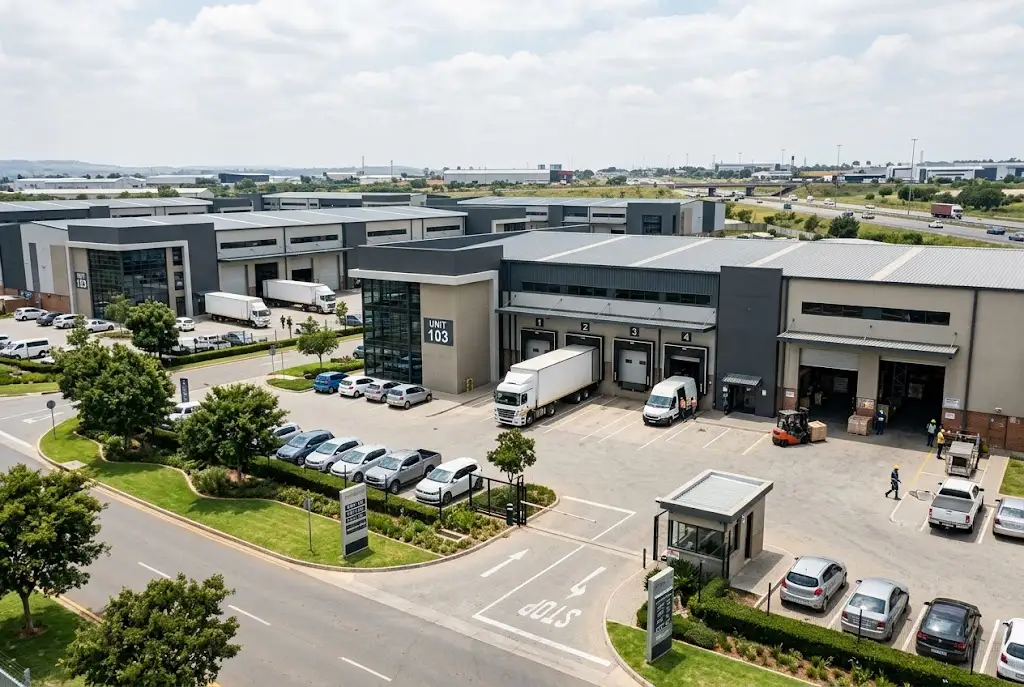
Established by Arden Group in 2021, the platform focuses on strategically located industrial properties that serve small and medium-sized businesses. Its portfolio includes warehouse, distribution, light manufacturing, fleet, service, and other industrial uses across multiple U.S. markets.
The company’s current website reports approximately 11 million square feet of last-mile facilities, while its dedicated portfolio information provides additional detail on its multi-tenant light-industrial and industrial-service strategies.
What Is Arden Logistics Parks?
Arden Logistics Parks is a vertically integrated industrial real estate operating platform established by Arden Group. Its focus is on operationally intensive industrial real estate, particularly multi-tenant light industrial business parks and industrial service facilities.
The company’s strategy goes beyond simply owning industrial buildings. It acquires properties, improves them, manages them, leases available space, and uses its internal operating capabilities to enhance property performance and tenant experience.
This model is particularly relevant to businesses that need functional warehouse or industrial space without the scale or cost of a massive distribution center.
When Was Arden Logistics Parks Established?
Arden Logistics Parks was established by Arden Group in 2021 as a specialized logistics real estate operating platform.
The original launch announcement described the platform as focusing on small- and medium-bay multi-tenant industrial warehouses in urban infill locations throughout the United States. The strategy was designed around an industrial real estate segment that could serve local and regional businesses requiring strategically located operational space.
What Type of Properties Does Arden Logistics Parks Own?
The portfolio primarily consists of industrial properties designed to accommodate multiple tenants and operational uses.
Multi-Tenant Light Industrial Properties
Multi-tenant light industrial properties contain multiple individual suites within a larger industrial complex. Businesses can lease space according to their operational requirements rather than occupying an entire large distribution facility.
Arden’s current portfolio information identifies warehouse, distribution, and light manufacturing as key uses for its multi-tenant industrial properties.
Industrial Service Facilities
Arden also invests in industrial service facilities. These properties can support businesses involved in fleet operations, transportation, equipment storage, vehicle service, and other operational activities.
Current company information identifies uses including trailer and container yards, fleet storage, truck service, truck terminals, drayage yards, first- and final-mile facilities, and industrial outdoor storage.
Last-Mile Facilities
Last-mile industrial real estate is designed to support the final stages of distribution between larger supply-chain networks and customers or local businesses.
Location is particularly important for last-mile facilities because transportation efficiency can depend heavily on proximity to customers, highways, airports, ports, and population centers.
Why Is Multi-Tenant Industrial Real Estate Important?
Not every business needs a million-square-foot distribution center. Many small and medium-sized companies need much more modest amounts of warehouse, showroom, office, production, or service space.
Multi-tenant industrial parks can fill this gap by offering flexible suites within strategically located business parks.
Arden’s own industry explanation describes multi-tenant industrial real estate as a specialized sector serving businesses that require flexible space for warehouse, office, showroom, light manufacturing, service, and distribution operations.
This makes the asset class relevant to a wide variety of local and regional businesses.
Arden Logistics Parks Portfolio
Arden Logistics Parks has developed a geographically diverse portfolio across multiple U.S. markets.
Its current property search includes markets such as:
- Atlanta, Georgia
- Boston, Massachusetts
- Charlotte, North Carolina
- Columbus, Ohio
- Dallas, Texas
- Houston, Texas
- Indianapolis, Indiana
- Minneapolis, Minnesota
- Philadelphia, Pennsylvania
- San Antonio, Texas
- Tampa, Florida
- West Palm Beach, Florida
The company’s property-search platform also shows additional cities and properties across several states, reflecting the broader geographic reach of its industrial portfolio.
Why Location Matters to Arden Logistics Parks
Industrial real estate is heavily dependent on location. A warehouse can have excellent physical characteristics but still be less useful if it is difficult for trucks, employees, suppliers, or customers to reach.
Arden focuses on transit-oriented markets where properties can benefit from access to important transportation infrastructure.
Relevant location factors can include:
- Interstate highways.
- Major airports.
- Seaports and intermodal facilities.
- Large population centers.
- Established industrial districts.
- Major employment centers.
- Regional distribution routes.
These characteristics can help businesses reduce transportation friction and improve access to customers and suppliers.
Arden Logistics Parks and Last-Mile Distribution
Last-mile distribution has become increasingly important as businesses and consumers expect faster delivery and greater availability of products.
Large regional distribution centers may handle significant volumes of inventory, but goods still need to move closer to their final destinations. Urban-infill industrial facilities can help bridge that gap.
Strategically located industrial parks can provide businesses with relatively close access to population centers without requiring them to operate from expensive downtown locations.
This makes last-mile industrial real estate an important component of modern supply-chain infrastructure.
How Arden Logistics Parks Supports Small and Medium Businesses
One of the company’s stated priorities is serving small and medium-sized businesses.
These businesses can have very different requirements from major national distribution companies. They may need a combination of warehouse, office, showroom, service, production, or storage space.
A flexible industrial park can allow a company to select space that better matches its current operation.
As a business grows, the ability to lease additional space or relocate within a familiar market can also become valuable.
What Businesses Can Use Arden Industrial Properties For?
The appropriate use depends on the individual property, zoning, lease terms, and permitted activities. However, Arden’s portfolio is designed to support a broad range of industrial and business functions.
Warehousing
Companies can use industrial space to store inventory, equipment, materials, or finished goods.
Distribution
Distribution businesses can use strategically located facilities to receive, organize, and move goods throughout regional markets.
Light Manufacturing
Some industrial suites can accommodate light manufacturing activities where permitted by the property and local regulations.
Fleet Operations
Industrial service properties can support fleet storage, vehicle-related operations, equipment maintenance, and transportation businesses.
Showroom and Office Uses
Some multi-tenant industrial properties can combine operational warehouse space with office or showroom areas, allowing businesses to maintain several functions in one location.
Industrial Service Facilities and Transportation
Industrial service facilities are especially relevant to transportation and logistics companies.
Arden identifies potential uses such as trailer and container yards, vehicle parking, drop yards, drayage yards, fleet storage, truck service, and truck terminals.
These facilities can support the physical infrastructure required to keep transportation operations running.
This is an important distinction between logistics real estate and transportation itself. Arden provides the property infrastructure that businesses can use for logistics-related operations rather than functioning primarily as a freight carrier.
Arden Logistics Parks vs. a Traditional Warehouse Operator
A traditional warehouse operator may primarily provide storage or fulfillment services. Arden Logistics Parks operates from a different position within the supply chain.
Its core business is industrial real estate ownership and operations.
The company acquires and improves properties, manages them, leases space to businesses, and develops an industrial real estate portfolio.
That means a tenant leasing an Arden property remains responsible for operating its own business and supply-chain activities within the leased space.
Arden’s Vertically Integrated Model
One of the distinguishing features of Arden Logistics Parks is its vertically integrated operating model.
The platform combines functions including:
- Acquisitions.
- Asset management.
- Property management.
- Construction management.
- Finance and accounting.
- Technology and data analytics.
Keeping these functions within an integrated platform can allow teams to coordinate property improvements, leasing, operations, and investment decisions more closely.
For tenants, this approach can translate into a more consistent property-management experience, while investors benefit from an operating model designed to manage assets throughout their lifecycle.
How Arden Improves Industrial Properties
Industrial properties do not necessarily remain competitive without ongoing investment. Buildings may require upgrades, repairs, reconfiguration, improved loading areas, modernized office components, or other improvements to remain attractive to tenants.
Arden’s investment strategy includes acquiring properties that can benefit from renovations, rebranding, repositioning, leasing improvements, or development opportunities.
This value-add approach can improve the functionality and marketability of industrial assets while supporting long-term property performance.
Arden Logistics Parks and Technology
Technology is becoming increasingly important in industrial real estate.
Arden’s integrated platform includes technology and data analytics as one of its internal capabilities. Data can help property operators understand occupancy, tenant requirements, maintenance needs, operating performance, and market conditions.
For industrial real estate investors, better data can support more informed acquisition, leasing, capital-improvement, and asset-management decisions.
Arden Logistics Parks and Supply Chain Efficiency
Industrial real estate can influence supply-chain efficiency even though property owners do not physically transport the goods.
The location, layout, loading capabilities, access, parking, and flexibility of a facility can affect how efficiently a tenant receives, stores, processes, and distributes products.
A strategically located warehouse may reduce transportation distances, improve delivery times, and make it easier to serve local customers.
For businesses, the real estate decision is therefore also a logistics decision.
Examples of Arden’s Industrial Expansion
Arden Logistics Parks has expanded its footprint through acquisitions in multiple U.S. markets.
For example, the company acquired a three-building Minneapolis industrial portfolio totaling approximately 361,428 square feet in 2023. The portfolio included properties in Eden Prairie and Eagan and was reported as 98% leased at the time of acquisition.
Arden also acquired a three-building West Palm Beach industrial portfolio totaling approximately 195,532 square feet in 2023. That portfolio was reported as 98% leased and included more than 40 tenants.
These transactions illustrate the company’s strategy of acquiring multi-tenant industrial properties in established markets rather than relying on a single geographic region.
Recent Arden Industrial Portfolio Financing
In April 2025, JLL announced a $99.1 million refinancing arranged for five Arden Logistics Parks industrial properties across multiple states.
The portfolio covered more than 765,000 square feet across 11 buildings. JLL reported that the properties included multi-tenant shallow-bay buildings and an industrial service facility, with the portfolio 94.4% leased to 92 tenants at the time.
The properties were also described as being near major transportation hubs, airports, and interstate highways, supporting last-mile distribution and regional logistics activity.
This transaction demonstrates how industrial real estate portfolios can attract institutional financing when properties have strong locations, diversified tenancy, and relevant logistics characteristics.
What Makes a Good Logistics Park?
Several characteristics can determine whether an industrial park is attractive to logistics and operational businesses.
Transportation Access
Proximity to major highways, airports, ports, and intermodal facilities can make transportation more efficient.
Functional Buildings
Clear heights, loading positions, parking, warehouse layouts, and usable floor space can influence how effectively tenants operate.
Flexible Suite Sizes
Businesses have different space requirements. Smaller and mid-sized suites can provide options for local and regional companies.
Strong Labor Access
Industrial businesses need employees who can reach the property reliably. Access to established labor markets can therefore influence property demand.
Customer Proximity
For last-mile and service businesses, being close to customers can reduce delivery times and transportation costs.
What Should Businesses Consider Before Leasing Industrial Space?
A business evaluating an Arden Logistics Parks property should assess more than the advertised square footage.
- Location: Examine highway, airport, port, customer, and supplier access.
- Space requirements: Determine the warehouse, office, showroom, and operational area needed.
- Loading: Review dock-high and drive-in loading capabilities.
- Ceiling height: Confirm that clear height is suitable for storage systems and equipment.
- Parking: Evaluate employee, customer, vehicle, and trailer parking.
- Expansion: Consider whether additional space may be available as the business grows.
- Lease terms: Review rent, operating expenses, renewal provisions, maintenance responsibilities, and permitted uses.
- Utilities: Confirm electrical capacity, water, internet, and other operational requirements.
- Zoning: Verify that the intended business activity is permitted.
Arden Logistics Parks Markets
Arden’s current property platform covers multiple major and secondary U.S. industrial markets.
Its market strategy emphasizes locations with strong transportation infrastructure and business fundamentals. Examples include Dallas, Houston, Atlanta, Boston, Charlotte, Indianapolis, Minneapolis, Philadelphia, San Antonio, Tampa, and West Palm Beach.
Each market has different characteristics, so businesses should evaluate individual properties rather than assuming that every Arden location offers identical features.
Dallas as an Example of a Logistics Market
Arden describes the Dallas-Fort Worth area as a major transportation gateway with extensive highway and airport connectivity. The region’s business environment, labor force, and central position make it attractive for logistics and warehouse users.
This illustrates why Arden focuses on transit-oriented industrial markets. Businesses can benefit from properties that place them within established transportation and commercial networks.
Houston as Another Industrial Market
Houston provides another example of a market where logistics real estate can benefit from transportation infrastructure and economic diversity.
The region’s major port, population growth, business activity, and transportation connections contribute to its importance for industrial users.
Arden Logistics Parks and Small Business Growth
Small and medium-sized businesses are a major component of local economies, and their space requirements can change over time.
A business may initially need a small warehouse with office space and later require additional storage or production capacity.
Flexible industrial real estate can help businesses respond to these changes without immediately moving into a large distribution facility.
This tenant-focused approach is central to Arden’s stated operating philosophy.
Related Logistics and Supply Chain Resources
FreshDell also covers other parts of the logistics ecosystem. Its guide to FJ Carrier Logistics examines freight transportation and cross-border logistics, while its article on DRF Logistics explores e-commerce fulfillment and supply-chain operations.
Readers interested in military logistics can also explore 92A Automated Logistical Specialist to see how inventory and supply management works in a different operational environment.
Frequently Asked Questions About Arden Logistics Parks
What is Arden Logistics Parks?
Arden Logistics Parks is a vertically integrated industrial real estate operating platform established by Arden Group. It focuses on acquiring, improving, leasing, and managing multi-tenant light industrial properties and industrial service facilities.
When was Arden Logistics Parks founded?
Arden Logistics Parks was established by Arden Group in 2021.
What type of properties does Arden Logistics Parks focus on?
The company focuses primarily on multi-tenant light industrial business parks and industrial service facilities. Uses can include warehousing, distribution, light manufacturing, fleet operations, truck service, outdoor storage, and first- or final-mile logistics.
Where does Arden Logistics Parks operate?
Arden operates across multiple U.S. markets, including Atlanta, Boston, Charlotte, Columbus, Dallas, Houston, Indianapolis, Minneapolis, Philadelphia, San Antonio, Tampa, and West Palm Beach, among other locations represented in its property portfolio.
Does Arden Logistics Parks provide trucking services?
Arden Logistics Parks is primarily an industrial real estate owner and operator rather than a traditional trucking carrier. Its properties provide infrastructure that transportation, distribution, manufacturing, and service businesses can use.
Who leases Arden Logistics Parks properties?
Its tenants are primarily small and medium-sized businesses using industrial properties for warehouse, distribution, manufacturing, service, fleet, office, showroom, and other operational purposes.
Why are Arden Logistics Parks properties important to supply chains?
Strategically located industrial properties can support receiving, storage, manufacturing, distribution, and last-mile activities. Their proximity to highways, airports, ports, and population centers can improve operational accessibility.
Final Thoughts
Arden Logistics Parks represents an important part of the modern logistics ecosystem: the industrial real estate infrastructure that allows businesses to store, manufacture, service, and distribute goods.
Its strategy focuses on multi-tenant light industrial properties and industrial service facilities in strategically located U.S. markets. By combining acquisitions, property management, asset management, construction, finance, and technology capabilities, Arden operates as an integrated industrial real estate platform rather than simply a conventional warehouse landlord.
The company’s emphasis on last-mile facilities and urban-infill locations is particularly relevant as supply chains become increasingly focused on speed, accessibility, and proximity to customers.
For businesses seeking industrial space, the key lesson is that a warehouse is more than a building. Location, loading capacity, flexibility, transportation access, labor availability, and surrounding infrastructure can all influence the success of an operation.
As logistics networks continue to evolve, strategically located industrial real estate will remain an important foundation for warehousing, distribution, manufacturing, fleet operations, and last-mile delivery.