

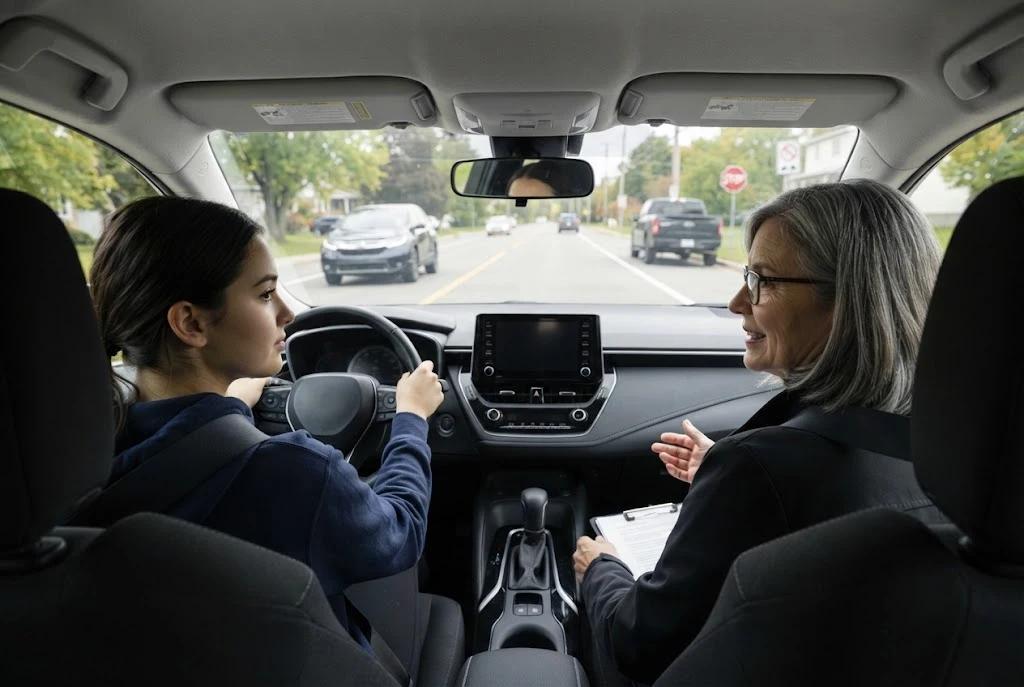
A&A Driver Education: Master Safe Driving With Expert Guidance Today!
Learning to drive is a major step, but becoming a safe driver involves much more than learning how to operate a vehicle. Drivers need to understand road rules, recognize hazards, control the vehicle smoothly, and make responsible decisions when traffic conditions change.
A&A Driver Education provides driver training for beginners and experienced drivers in the greater Moncton, Dieppe, Riverview, and surrounding areas of New Brunswick. Its approach emphasizes being Alert & Aware behind the wheel while combining knowledge with practical driving instruction.
For someone preparing to learn the fundamentals, improve existing skills, or get additional preparation before a road test, structured instruction can provide a more focused path toward safer and more confident driving.
What Makes Driver Education Important?
Driving requires continuous observation and decision-making. A driver must monitor traffic, signs, road conditions, pedestrians, cyclists, intersections, and the actions of other motorists while maintaining control of the vehicle.
That combination can be difficult for a new driver to manage without structured practice. Driver education helps break the process into individual skills and gives learners opportunities to apply what they learn in practical situations.
Good instruction should help a learner develop habits that remain useful after the road test, including observation, communication, speed management, proper positioning, and hazard awareness.
A&A Driver Education for Beginners and Experienced Drivers
A&A Driver Education states that it provides training for both beginners and experienced drivers. That distinction matters because different learners can have very different goals.
A first-time driver may need broad instruction covering basic vehicle control and road awareness. An experienced driver may instead need an evaluation, refresher training, or additional practice before a road test.
A&A describes its offerings as including individual lessons as well as complete programs, allowing training to be matched more closely to the learner’s situation.
For First-Time Drivers
Beginning drivers can benefit from learning the fundamentals in a structured order. Early instruction can focus on vehicle control, observation, steering, braking, signaling, lane positioning, intersections, and other essential skills.
Building these foundations gradually can make more complicated driving situations easier to understand later.
For Experienced Drivers
Additional training can also be useful for drivers who already have experience. Someone returning to driving after a long break, preparing for a road test, or looking to improve a particular maneuver may benefit from targeted instruction.
An evaluation lesson can help identify specific areas that deserve additional practice rather than requiring the driver to repeat skills they already understand.
The Alert & Aware Approach to Driving
A&A Driver Education identifies “Alert & Aware” as a central concept in its training philosophy. The idea is straightforward: safe driving requires continuous attention and awareness from every road user.
Being alert means paying attention to what is happening around the vehicle rather than focusing only on the road immediately ahead. Awareness also means anticipating that another driver, pedestrian, cyclist, or changing road condition may require a response.
This mindset supports defensive driving because it encourages drivers to identify potential problems before they become emergencies.
Key Skills Every New Driver Should Develop
Professional driver education should go beyond simply moving a vehicle from one location to another. Learners need a broad collection of practical skills.
- Starting and stopping smoothly
- Maintaining appropriate speed
- Using mirrors effectively
- Checking blind spots before changing position
- Signaling clearly
- Maintaining proper lane position
- Making safe turns
- Approaching intersections carefully
- Maintaining an appropriate following distance
- Recognizing potential hazards
- Parking and maneuvering safely
- Adjusting driving to road and weather conditions
These skills work together. A driver who understands traffic rules but fails to observe surrounding vehicles can still make poor decisions, while a driver with good vehicle control still needs sound judgment and awareness.
Why Defensive Driving Matters
Defensive driving is based on anticipating potential hazards and creating enough time and space to respond to them.
A defensive driver does not assume that every other road user will behave perfectly. Instead, the driver remains prepared for unexpected braking, sudden lane changes, pedestrians entering the roadway, poor visibility, or changing traffic conditions.
Important defensive-driving habits include:
- Scanning the road ahead instead of focusing only on the vehicle immediately in front
- Maintaining a safe following distance
- Checking mirrors regularly
- Watching for potential conflicts at intersections
- Adjusting speed when conditions become more difficult
- Leaving sufficient space to react to unexpected situations
- Avoiding unnecessary distractions
- Remaining patient instead of reacting emotionally to other drivers
Practical Driving Lessons Build Real Skills
Driving knowledge becomes much more useful when learners have the opportunity to apply it behind the wheel.
Practical instruction allows learners to experience how steering, braking, observation, positioning, and decision-making work together. An instructor can also identify mistakes that may be difficult for a new driver to recognize independently.
For example, a learner may understand that mirrors should be checked but still develop inconsistent mirror habits. Direct feedback can help turn a rule into a reliable driving behavior.
Preparing for a New Brunswick Road Test
Road-test preparation should focus on the skills that make a driver competent, not simply on memorizing what might happen during the assessment.
A learner preparing for a road test should be comfortable with fundamental vehicle control, observation, signaling, speed management, lane positioning, turns, intersections, parking, and safe responses to traffic situations.
Additional instruction can be particularly useful when a learner knows the basics but is unsure about one or two specific skills.
Common Areas to Review Before Testing
- Complete and controlled stops
- Proper signaling before maneuvers
- Mirror and blind-spot checks
- Lane changes
- Turning at intersections
- Speed control
- Following distance
- Parking maneuvers
- Observation of pedestrians and cyclists
- Calm decision-making
The goal is to make these behaviors consistent enough that the driver can perform them naturally while remaining aware of the surrounding traffic.
Understanding New Brunswick Driver Education
New Brunswick provides an official driver’s handbook covering licensing, vehicle registration, equipment, rules of the road, safe driving, sharing the road, traffic signs, motorcycle information, and commercial vehicle information.
Anyone learning to drive in the province should use the current government material alongside professional instruction when preparing for licensing.
The official New Brunswick Driver’s Handbook provides the province’s published reference material for safe driving and licensing information.
Automatic Vehicle Training
A&A Driver Education lists automatic vehicles among its training offerings. This can be useful for learners whose driving goals involve operating an automatic vehicle.
Regardless of transmission type, the fundamental responsibilities of a driver remain the same: observe the road, follow applicable rules, control the vehicle properly, and respond appropriately to changing conditions.
Advanced Driver Training
A&A also lists advanced training among its services. Advanced instruction can be useful for learners who have progressed beyond the fundamentals and want to strengthen specific driving skills.
The appropriate training level depends on the learner’s experience and objectives. New drivers should first establish strong basic habits before attempting more demanding situations.
Bilingual Driver Instruction
A&A Driver Education states that it has bilingual instructors and highlights more than 35 years of combined instructor experience in student training.
For learners who are more comfortable receiving instruction in more than one language, bilingual teaching can make explanations easier to understand and discuss.
How Personalized Lessons Can Help
Every learner has different strengths and weaknesses. Some students may need more practice with parking, while others may struggle with observation, intersections, lane changes, or confidence in traffic.
Personalized instruction allows attention to be directed toward those areas instead of treating every learner as though they have exactly the same needs.
A focused lesson can also help experienced drivers identify habits that have developed over time and may need correction.
Building Confidence Without Becoming Overconfident
Confidence is useful when it comes from competence. A driver should feel increasingly comfortable because they understand what to do and have practiced it correctly.
Overconfidence is different. Assuming that nothing unexpected will happen can reduce attention and increase risk.
Professional driver education should therefore encourage a balanced mindset: be confident in your skills while remaining cautious, observant, and prepared for changing conditions.
Managing Nervousness Behind the Wheel
New drivers may experience nervousness when they first encounter traffic, busy intersections, unfamiliar roads, parking situations, or other challenging environments.
Structured lessons can help learners approach these situations progressively. Instead of attempting every difficult maneuver immediately, drivers can build their abilities step by step.
As familiarity grows, many driving tasks become easier to manage because the learner no longer has to consciously think through every basic action.
Why Instructor Feedback Is Valuable
A passenger can sometimes notice a driving habit that the driver does not recognize. An instructor can provide specific feedback about steering, braking, positioning, observation, signaling, or decision-making.
Good feedback should explain not only what needs to change but why the change matters. Understanding the reason behind a correction makes it easier for a learner to apply the lesson in another driving situation.
Preparing for Different Road Conditions
Drivers cannot assume that every road will provide the same conditions. Weather, traffic volume, visibility, road surfaces, construction, and time of day can all affect driving decisions.
New Brunswick drivers should be prepared to adapt their speed, following distance, observation, and vehicle control when conditions become more difficult.
Safe driving is therefore not about following one fixed routine. It is about recognizing the current situation and making an appropriate decision.
Vehicle Condition and Safe Driving
Driver skill is only one part of road safety. The condition of the vehicle also matters.
Drivers should pay attention to tires, brakes, lights, mirrors, windshield visibility, and other components that affect safe operation.
Regular maintenance can help identify problems before they become more serious. FreshDell readers interested in vehicle care can also explore professional auto service and vehicle maintenance.
Additional FreshDell coverage of reliable auto service and vehicle care and maintenance can provide broader context for responsible vehicle ownership.
Driving Skills and Long-Term Road Safety
The value of driver education should not end when a learner receives a licence. Driving skills need to remain active through continued attention and responsible behavior.
Drivers encounter new roads, traffic patterns, weather conditions, vehicles, and situations throughout their driving lives. Continuing to apply defensive-driving principles helps keep safety at the center of everyday decisions.
For readers interested in the wider automotive industry, FreshDell also covers automotive business and digital marketing.
A&A Driver Education in the Greater Moncton Area
A&A Driver Education is based in Dieppe, New Brunswick, and states that it has served the greater Moncton, Dieppe, Riverview, and surrounding areas since 1990.
The school identifies training for both beginners and experienced drivers as part of its offering. It also provides different lesson and package options, including evaluation lessons for drivers who want to improve their skills before a road test.
Readers interested in the school’s current programs, packages, class schedule, and registration process should verify those details directly because course availability and scheduling can change.
How to Choose the Right Driver Education Program
Choosing a driving school should begin with the learner’s actual needs rather than with promotional promises.
Consider Your Experience
A complete beginner may need a comprehensive program, while an experienced driver may benefit more from an evaluation or targeted lesson.
Look at the Training Approach
Consider whether the program combines knowledge with practical driving instruction and whether safety and awareness are central to the teaching approach.
Ask About Current Program Details
Before registering, confirm current schedules, package options, lesson formats, instructor availability, and any applicable licensing requirements.
Focus on Skill Development
A useful driver-education program should help you become a more capable and responsible driver rather than focusing only on passing one assessment.
Frequently Asked Questions About A&A Driver Education
What is A&A Driver Education?
A&A Driver Education is a driving school serving the greater Moncton, Dieppe, Riverview, and surrounding areas of New Brunswick. It provides training for beginners and experienced drivers.
Does A&A Driver Education offer lessons for experienced drivers?
Yes. A&A states that it trains both beginners and experienced drivers and offers individual lessons, including evaluation lessons for drivers who want to improve their skills.
Does A&A offer complete driver-training programs?
Yes. The school describes both individual lessons and complete programs among its available training options.
Does A&A Driver Education teach students in automatic vehicles?
Yes. Automatic vehicles are listed among the school’s training offerings.
Does A&A provide advanced driver training?
Yes. Advanced training is listed among the school’s services.
Does A&A have bilingual instructors?
A&A states that it has bilingual instructors and highlights more than 35 years of experience in student training across its instructors.
Where is A&A Driver Education located?
A&A Driver Education lists its address as 451 Rue Paul, Dieppe, NB E1A 6W8, Canada.
Can driver education help with road-test preparation?
Yes. A&A specifically describes evaluation lessons and training options intended to help drivers improve their skills before a road test.
Final Thoughts
A strong driver is not simply someone who can operate a vehicle. Safe driving requires awareness, judgment, practical control, knowledge of road rules, and the ability to adapt when conditions change.
A&A Driver Education provides training for both beginners and experienced drivers in the greater Moncton area, with options that include individual lessons, complete programs, automatic-vehicle training, advanced training, and bilingual instruction.
For learners who want to develop safer driving habits, the most useful approach is to focus on practical skills, defensive driving, observation, and responsible decision-making. Those habits can remain valuable long after the road test is over.