

This distinction matters for businesses, researchers, trucking professionals, and anyone searching for information about freight movement, manufacturing logistics, warehousing, and supply-chain operations in the Lehigh Valley. Rather than treating the phrase as a conventional third-party logistics company, it is more useful to examine how manufacturing, parts movement, transportation, warehousing, and production planning connect around Mack’s Macungie operations.
What Does Mack Macungie Logistics Refer To?
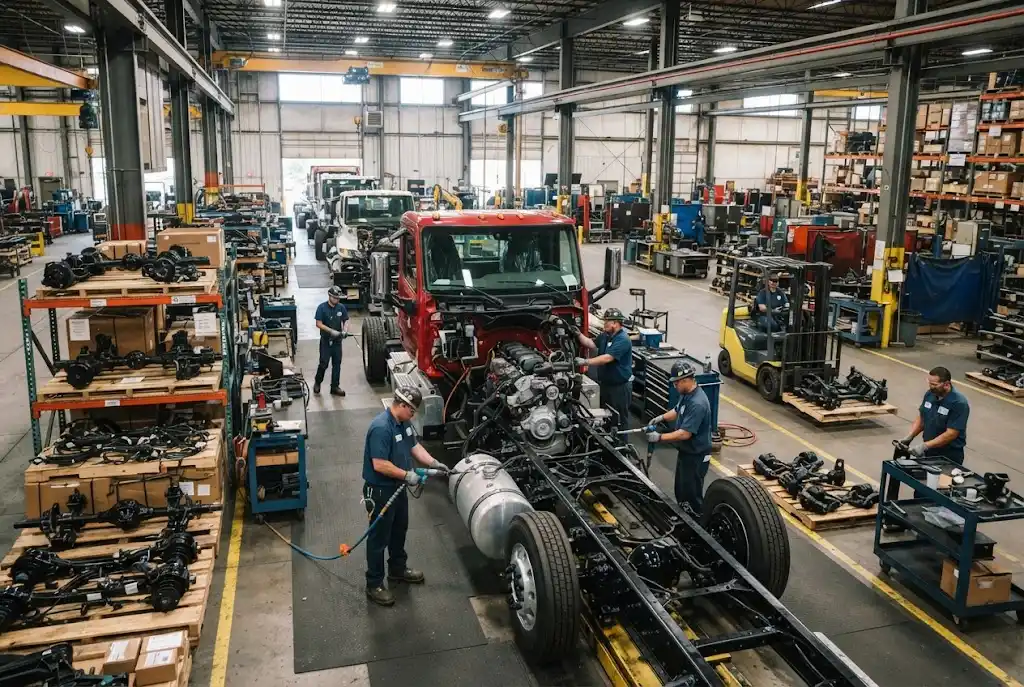
The term Mack Macungie Logistics is best understood in the context of Mack Trucks’ industrial and supply-chain operations in Macungie, Pennsylvania. Mack’s Lehigh Valley Operations is a 1.7-million-square-foot facility that has been part of the company’s production network since 1975. The site includes cab and chassis assembly lines, a truck modification center, and an engine grooming line.
That manufacturing environment requires a coordinated flow of components, assemblies, finished vehicles, production materials, and supporting services. In this setting, logistics is not limited to trucking. It encompasses inventory coordination, material handling, supplier deliveries, production scheduling, warehousing, transportation planning, and the movement of finished products.
For readers researching broader logistics concepts, FreshDell’s Logistics category provides additional context around freight, supply-chain operations, warehousing, and related business topics.
Macungie’s Role in Mack Truck Manufacturing
Mack Trucks identifies its Lehigh Valley Operations facility in Macungie as a central manufacturing location for its North American truck production. The facility’s production environment connects manufacturing processes with a large network of suppliers and transportation activities.
Modern truck manufacturing depends on the availability of thousands of individual components and assemblies. Parts must arrive at the right facility, in the right sequence, and within production requirements. A disruption in one portion of that chain can affect downstream manufacturing schedules.
This is why logistics planning is closely connected to manufacturing and storage operations. Warehousing, material staging, inventory management, and transportation are all supporting elements of an efficient production system.
How Freight and Supply Chain Operations Connect
A manufacturing supply chain typically begins with suppliers producing or distributing components. Those materials then move through transportation networks before reaching production facilities. Once components arrive, they may be inspected, stored, staged, and delivered to manufacturing areas according to operational requirements.
For a heavy-duty truck manufacturer, logistics can involve large and specialized components rather than conventional consumer parcels. This makes scheduling, handling, routing, inventory visibility, and coordination especially important.
The broader logistics ecosystem can include trucking companies, warehouses, freight carriers, ports, rail networks, customs providers, and specialized transportation services. FreshDell’s coverage of FJ Carrier Logistics and supply-chain efficiency provides a related perspective on freight transportation and logistics operations.
Why Transportation Planning Matters
Transportation is one of the most visible parts of a supply chain, but it is only one component of the larger system. Effective planning requires companies to consider shipment timing, route availability, loading requirements, inventory levels, production schedules, and delivery priorities.
For operations around Macungie, proximity to major transportation corridors in Pennsylvania and the wider Mid-Atlantic region can support connections between suppliers, manufacturing facilities, distribution points, and customers.
Businesses interested in the transportation side of the topic can also explore FreshDell’s Transportation & Automotive category, which covers related vehicle and transportation subjects.
Warehousing and Inventory Coordination
Warehousing provides an important buffer between incoming materials and manufacturing requirements. Instead of moving every component directly from a supplier to a production line at the exact moment it arrives, inventory can be received, organized, stored, and staged for controlled use.
Good inventory coordination reduces unnecessary handling while helping production teams maintain access to required materials. It can also improve visibility into incoming shipments and help identify potential shortages before they create larger operational problems.
This is closely related to the principles discussed in FreshDell’s article about industrial warehousing and distribution, where storage facilities form part of a wider logistics network.
Technology in Modern Logistics Operations
Technology has changed how modern supply chains monitor inventory, transportation, and production activity. Transportation management systems, warehouse management software, GPS tracking, electronic documentation, and data analytics can all contribute to greater operational visibility.
However, technology should be viewed as an operational tool rather than a guarantee of performance. Its value depends on accurate data, properly configured systems, trained employees, and effective processes.
Supply-chain technology can also intersect with broader industrial technology. FreshDell’s coverage of industrial connectivity and technology offers another related perspective on the technological infrastructure supporting modern operations.
Supplier Coordination and Production Continuity
One of the most important challenges in manufacturing logistics is coordinating suppliers with production schedules. A factory can have substantial production capacity, but missing components can still interrupt planned output.
Supplier coordination therefore involves more than placing orders. Companies need processes for forecasting requirements, tracking deliveries, managing inventory, identifying exceptions, and responding when transportation or production conditions change.
The role of logistics becomes even more important when components originate from multiple geographic markets. International freight may introduce additional considerations involving ports, customs, documentation, transit times, and transportation handoffs.
How the Mack Logistics Center Fits the Picture
Public trade records identify a Mack Logistics Center at 3041 Shoeneck Road in Macungie, Pennsylvania. Available import records show activity involving truck parts and identify relationships with organizations associated with the Volvo Group and Mack Trucks.
This information provides useful evidence that logistics and inbound freight activity are part of the broader Macungie manufacturing ecosystem. It should not, however, be interpreted as proof that every service described in older online content is offered by a standalone company called Mack Macungie Logistics.
That distinction is particularly important when evaluating claims about freight services, pricing, customer reviews, fleet capabilities, or logistics technology.
Relationship Between Manufacturing and Fleet Operations
Truck manufacturing and transportation naturally overlap. Manufacturers depend on logistics to receive components and move finished vehicles, while fleets depend on manufacturers for vehicles that can perform demanding transportation work.
FreshDell’s related coverage of vehicle service operations, fleet and vehicle maintenance, and reliable automotive service helps illustrate the wider ecosystem that supports commercial transportation.
For businesses operating trucks, manufacturing is only the beginning. Maintenance, parts availability, repair infrastructure, route planning, fuel management, driver operations, and regulatory compliance all influence the total cost and reliability of transportation.
Supply Chain Resilience in the Lehigh Valley
Supply-chain resilience means having the ability to continue operations when unexpected problems occur. Transportation delays, supplier shortages, equipment problems, weather events, and changes in demand can all affect manufacturing and distribution.
A resilient logistics strategy generally combines supplier diversification, inventory planning, transportation visibility, contingency planning, and clear communication between operational teams.
FreshDell’s coverage of logistics and supply-chain reliability provides a broader comparison point for understanding how freight organizations approach operational continuity.
Why Macungie Matters to the U.S. Trucking Industry
Macungie has an important connection to Mack Trucks’ North American manufacturing operations. The facility’s role in Class 8 truck production makes its supply chain relevant not only to the local economy but also to the broader commercial transportation industry.
When manufacturing, supplier logistics, transportation, and vehicle distribution work together effectively, the result is a more connected industrial network. That network supports the movement of goods well beyond Pennsylvania because the trucks produced for commercial fleets ultimately become part of wider freight transportation systems.
Readers interested in the operational side of logistics can also review FreshDell’s logistics and inventory management overview for another example of how organized material movement supports complex operations.
Key Takeaways for Businesses Researching Mack Macungie Logistics
- Mack’s Macungie operations are strongly connected to truck manufacturing and supply-chain activity.
- Lehigh Valley Operations is a major Mack Trucks manufacturing facility in Macungie, Pennsylvania.
- Logistics in a manufacturing environment includes materials, inventory, warehousing, transportation, and production coordination.
- Public trade records identify a Mack Logistics Center in Macungie, but that should not automatically be treated as evidence for every claim made about a standalone logistics provider.
- Businesses should verify current services, addresses, contacts, pricing, and operating relationships before making commercial decisions.
- Modern supply chains increasingly depend on visibility, data, transportation coordination, and resilient supplier networks.
Frequently Asked Questions
What is Mack Macungie Logistics?
Mack Macungie Logistics is a search phrase associated with logistics and supply-chain activity around Mack Trucks’ Macungie, Pennsylvania operations. It should not automatically be treated as the name of a separate freight company without independent verification.
Where is Mack’s Macungie facility located?
Mack Trucks’ Lehigh Valley Operations is located at 7000 Alburtis Road, Macungie, Pennsylvania 18062.
What does Mack’s Macungie facility produce?
Mack Trucks states that its Lehigh Valley Operations facility focuses on assembling Class 8 Mack trucks for North American and export markets.
Why is logistics important to truck manufacturing?
Truck manufacturing depends on a continuous flow of components, materials, inventory, and finished vehicles. Transportation and supply-chain coordination help connect suppliers, production operations, and distribution networks.
Is Mack Macungie Logistics a third-party logistics company?
The available information does not establish that the phrase represents a conventional standalone third-party logistics provider. It is safer to distinguish Mack’s manufacturing operations and the Mack Logistics Center from unverified claims about a separate logistics company.
Conclusion
Mack Macungie Logistics is best examined as part of the larger industrial and supply-chain ecosystem surrounding Mack Trucks in Macungie, Pennsylvania. The region connects manufacturing, inbound materials, warehousing, transportation, supplier coordination, and commercial trucking into a complex operational network.
For businesses researching this topic, accuracy is particularly important. Mack’s official facility information provides a reliable starting point for understanding its Macungie manufacturing operations, while logistics and trade data can provide additional context about freight activity. Understanding the distinction between verified manufacturing operations and unsupported claims about a separate logistics provider makes research more useful and commercially reliable.
FreshDell readers can continue exploring related topics through the site’s Logistics resources, Manufacturing & Storage resources, and Business Services coverage.