

On August 8, 2024, Pitney Bowes transferred 81% of the voting interests in DRF Logistics to an affiliate of Hilco Commercial Industrial, while retaining 19% of the voting interests and 100% of the economic interests. DRF Logistics and its subsidiary, DRF LLC, subsequently entered Chapter 11 proceedings as part of an orderly wind-down. The transaction and restructuring were disclosed in Pitney Bowes’ SEC filings. SEC filings provide the documented history of the DRF Logistics transaction and wind-down.
That history makes DRF Logistics an interesting case study in e-commerce logistics, fulfillment infrastructure, supply-chain management, and business restructuring. Rather than presenting DRF as a currently expanding logistics provider, this guide explains its role, background, operational significance, restructuring, and the lessons its story offers for modern supply chains.
What Is DRF Logistics?
DRF Logistics, LLC was a logistics entity associated with Pitney Bowes’ Global Ecommerce segment. The business supported e-commerce-related logistics activities and operated alongside DRF LLC. Court documents describe DRF as part of Pitney Bowes’ global e-commerce business and note that DRF was previously associated with Pitney Bowes Global Logistics LLC and Newgistics.
Its significance came from the changing requirements of e-commerce. Online retailers need systems capable of receiving merchandise, storing inventory, processing orders, preparing shipments, managing returns, and connecting fulfillment operations with transportation networks.
DRF therefore provides a useful example of how logistics can become closely integrated with e-commerce technology and fulfillment infrastructure.
DRF Logistics and the Pitney Bowes Global Ecommerce Business
To understand DRF Logistics, it helps to look at its connection with Pitney Bowes. The company was part of the broader Global Ecommerce segment, which provided services and infrastructure supporting online commerce.
In August 2024, Pitney Bowes announced transactions designed to facilitate an orderly wind-down of most of its Global Ecommerce reporting segment. As part of that transaction, an affiliate of Hilco acquired 81% of the voting interests in DRF Logistics, while a Pitney Bowes subsidiary retained the remaining voting interest and the economic interest described in the company’s filing.
The transaction was not simply a conventional sale of a growing logistics company. It was part of a broader restructuring and exit from the Global Ecommerce business.
What Happened to DRF Logistics?
Following the 2024 transaction, DRF Logistics and DRF LLC entered Chapter 11 proceedings. Pitney Bowes described the process as an orderly wind-down of the Global Ecommerce business.
The company’s subsequent filings continued to identify DRF Logistics as part of the discontinued Global Ecommerce operations. The restructuring included a proposed debtor-in-possession financing facility and a plan intended to manage the company’s obligations while the business was wound down.
As a result, articles describing DRF Logistics simply as an active logistics company can be misleading if they do not distinguish its historical operations from its post-2024 restructuring status.
For readers researching the company today, the most important takeaway is that DRF Logistics should be understood primarily through its former e-commerce logistics role and subsequent wind-down, rather than being presented as a conventional expanding carrier or 3PL.
What Role Did DRF Logistics Play in E-Commerce?
E-commerce logistics involves multiple interconnected activities. A customer placing an order online triggers a sequence that may involve inventory systems, warehouse operations, order processing, packaging, transportation, tracking, and returns.
Businesses operating in this environment need logistics infrastructure that can handle large numbers of individual shipments while maintaining accurate inventory and delivery information.
The former DRF business operated within this broader e-commerce ecosystem. Its history illustrates several important logistics functions.
Fulfillment
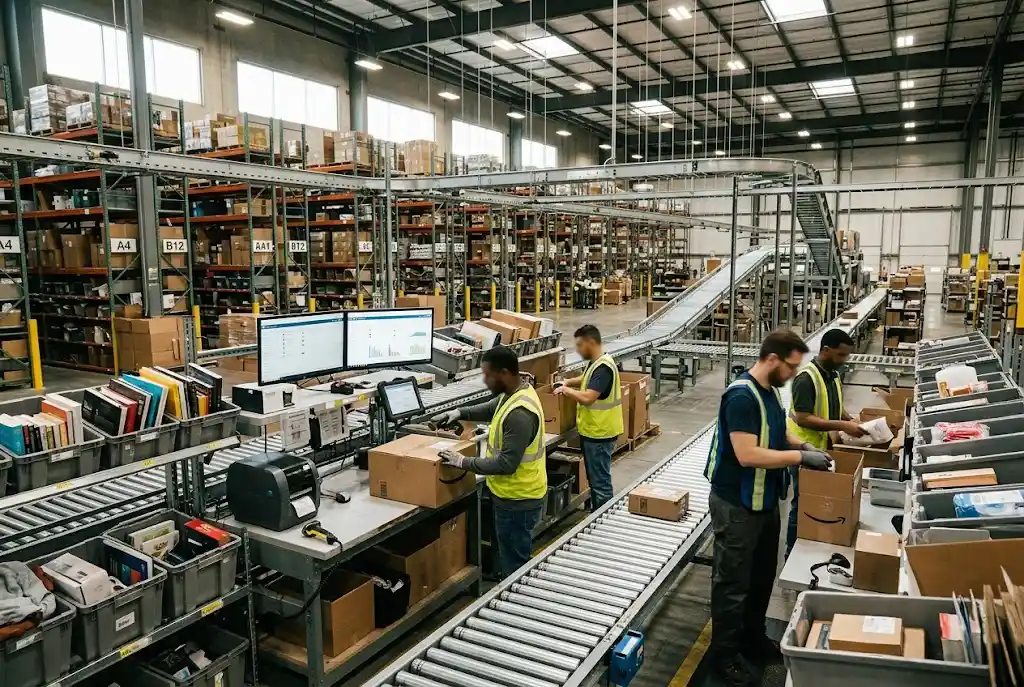
Fulfillment is the process of preparing customer orders for shipment. It generally includes receiving inventory, storing products, processing orders, picking items, packing packages, and handing shipments to transportation providers.
Inventory Management
Accurate inventory information is essential to e-commerce. If an online retailer sells products that are not actually available, customer orders can be delayed or canceled.
Transportation Coordination
Once an order is prepared, it needs to enter a transportation network. Effective logistics operations connect warehouse activity with carriers, delivery services, and customer-facing tracking systems.
Returns
Returns are another major component of e-commerce logistics. Returned products may need to be received, inspected, categorized, restocked, repaired, recycled, or disposed of depending on their condition and the retailer’s policies.
Why E-Commerce Logistics Is So Complex
Traditional logistics often involves moving relatively large shipments between businesses. E-commerce can create a different operating model, with large numbers of individual customer orders moving through fulfillment and parcel networks.
That creates several challenges:
- High order volumes.
- Large numbers of individual stock-keeping units.
- Demand fluctuations.
- Fast delivery expectations.
- Returns and reverse logistics.
- Inventory accuracy requirements.
- Integration between technology systems.
- Transportation cost management.
A logistics company supporting e-commerce therefore needs more than warehouse space. It needs processes and technology capable of coordinating physical inventory with digital orders.
DRF Logistics as a Supply Chain Case Study
The DRF story provides a useful case study because it demonstrates how logistics businesses can become deeply connected to the financial and strategic decisions of their parent organizations.
When e-commerce operations require significant infrastructure, companies must balance warehouse costs, transportation expenses, technology investment, labor requirements, customer expectations, and revenue growth.
For logistics operators, scale alone does not guarantee sustainable profitability. The cost of fulfilling each order, managing returns, maintaining facilities, transporting packages, and supporting technology must remain aligned with the economics of the customers being served.
DRF Logistics and Supply Chain Technology
Modern fulfillment depends heavily on technology. Warehouse-management systems, order-management platforms, inventory databases, transportation systems, barcode scanning, automation, and data analytics can all contribute to logistics performance.
The broader e-commerce logistics model depends on information moving alongside physical goods. An order must be visible in the system, inventory must be updated, the correct product must be picked, shipping information must be generated, and delivery progress must be communicated.
This creates a fundamental principle of modern logistics: physical efficiency and information accuracy must work together.
What Can Businesses Learn From DRF Logistics?
Scale Must Be Economically Sustainable
Large logistics networks can provide substantial capacity, but they also require substantial investment. Businesses must continuously evaluate whether infrastructure and operating costs are justified by customer demand.
Technology Is an Operating Requirement
Technology is no longer simply an optional improvement for e-commerce logistics. Inventory, orders, fulfillment, transportation, and returns increasingly depend on interconnected digital systems.
Customer Expectations Affect Logistics Economics
Consumers often expect fast and inexpensive delivery. Meeting those expectations can require warehouses close to customers, efficient carrier relationships, sophisticated software, and substantial operational capacity.
Reverse Logistics Matters
Returns can create significant costs. A successful e-commerce supply chain must plan for products moving back through the network rather than focusing only on outbound deliveries.
Business Structure Matters
DRF’s restructuring also demonstrates that logistics operations do not exist independently of corporate strategy. Ownership changes, financing, business exits, and restructuring decisions can fundamentally change the future of a logistics operation.
DRF Logistics vs. a Traditional Freight Carrier
It is important not to confuse e-commerce fulfillment logistics with traditional trucking.
A freight carrier primarily focuses on transportation. A fulfillment operation can manage inventory, warehousing, order processing, packaging, returns, and transportation coordination.
For example, FreshDell’s guide to FJ Carrier Logistics focuses on a motor-carrier model, while DRF’s historical role is more closely associated with e-commerce logistics and fulfillment infrastructure.
This distinction matters because businesses should select logistics partners based on the actual service they require rather than treating every company with “logistics” in its name as interchangeable.
How Fulfillment Fits Into the Modern Supply Chain
A simplified e-commerce supply chain can be represented as:
- Manufacturer produces merchandise.
- Products move to a distribution or fulfillment facility.
- Inventory is received and recorded.
- Customers place online orders.
- Warehouse systems identify the required products.
- Workers or automated systems pick and pack orders.
- Packages enter transportation networks.
- Customers receive their orders.
- Returns move through reverse-logistics processes when necessary.
Every stage depends on accurate information and coordination. A failure in inventory management can affect fulfillment, while a transportation delay can affect customer satisfaction.
What Is the Difference Between Logistics and Fulfillment?
Logistics is the broader process of planning and managing the movement and storage of goods. Fulfillment is a more specific part of that process focused on receiving inventory, processing customer orders, preparing shipments, and often managing returns.
A company can provide fulfillment services without operating a large transportation fleet. Likewise, a motor carrier can transport freight without providing warehousing or direct-to-consumer order fulfillment.
This distinction is useful when evaluating supply-chain providers and understanding where a company fits within the broader logistics ecosystem.
DRF Logistics and the Future of E-Commerce Supply Chains
Although the former DRF business entered a wind-down process, the logistics challenges it was associated with remain highly relevant.
E-commerce continues to require efficient fulfillment networks, accurate inventory visibility, flexible transportation, returns management, and technology integration. Companies operating in this space must constantly balance customer expectations with the actual cost of delivering those services.
The long-term direction of logistics is therefore likely to remain focused on better data, automation, network optimization, inventory visibility, and efficient coordination between warehouses and transportation providers.
Related Logistics Resources
Readers interested in the broader logistics sector can also explore FreshDell’s guide to 92A Automated Logistical Specialist, which explains how military supply and inventory operations work.
For another look at logistics infrastructure, Arden Logistics Parks explores the role of modern warehousing and distribution facilities. These topics complement the e-commerce fulfillment concepts discussed in this article.
Frequently Asked Questions About DRF Logistics
What is DRF Logistics?
DRF Logistics, LLC was a logistics entity associated with Pitney Bowes’ Global Ecommerce business. Its activities were connected to e-commerce logistics and fulfillment operations.
Is DRF Logistics still operating?
DRF Logistics entered Chapter 11 proceedings in August 2024 as part of an orderly wind-down of Pitney Bowes’ Global Ecommerce business. Current sources therefore should not be interpreted as evidence that it operates today as a conventional growing logistics provider.
What happened to DRF Logistics in 2024?
On August 8, 2024, Pitney Bowes transferred 81% of the voting interests in DRF Logistics to an affiliate of Hilco as part of a transaction connected to the wind-down of its Global Ecommerce segment. DRF subsequently entered Chapter 11.
Was DRF Logistics part of Pitney Bowes?
Yes. DRF Logistics was associated with Pitney Bowes’ Global Ecommerce segment. Pitney Bowes later transferred a controlling voting interest in DRF Logistics as part of its exit from that business.
What type of logistics did DRF support?
DRF was associated with e-commerce logistics and fulfillment operations. These activities involve functions such as inventory handling, order fulfillment, transportation coordination, and returns within an e-commerce supply chain.
Is DRF Logistics the same as every company named DRF Logistics?
No. “DRF Logistics” is not necessarily a unique business name. Multiple businesses can use similar names in different jurisdictions or industries. The information in this article refers specifically to DRF Logistics, LLC associated with Pitney Bowes’ Global Ecommerce business.
Final Thoughts
DRF Logistics provides an important example of how e-commerce logistics can become deeply integrated with corporate strategy, technology, fulfillment infrastructure, and supply-chain economics.
Its history is particularly relevant because the company transitioned from being part of Pitney Bowes’ Global Ecommerce operations to a restructuring and wind-down process beginning in 2024. That makes accuracy important when discussing the company today.
For logistics professionals and business owners, the broader lessons remain valuable. Successful e-commerce logistics requires accurate inventory, efficient fulfillment, reliable transportation coordination, technology integration, effective returns management, and sustainable operating economics.
Understanding these principles helps businesses evaluate logistics partners more intelligently and build supply chains that can respond to changing customer expectations without losing sight of cost and operational discipline.